
Nature-Positive Infrastructure: Engineering Biodiversity Net Gain in Modern Asset Design
In the evolving ESG landscape, Nature-Positive Infrastructure is no longer a conceptual aspiration—it is a measurable performance mandate. As global capital markets integrate biodiversity risk into asset valuation models, infrastructure leaders must move beyond “do no harm” toward Biodiversity Net Gain (BNG) as an operational benchmark.
While decarbonization defined the last decade of infrastructure strategy, the next frontier is nature integration at scale. Nature-Positive Infrastructure aligns ecological resilience with asset durability, financial performance, and regulatory compliance—transforming biodiversity from an externality into a core KPI.
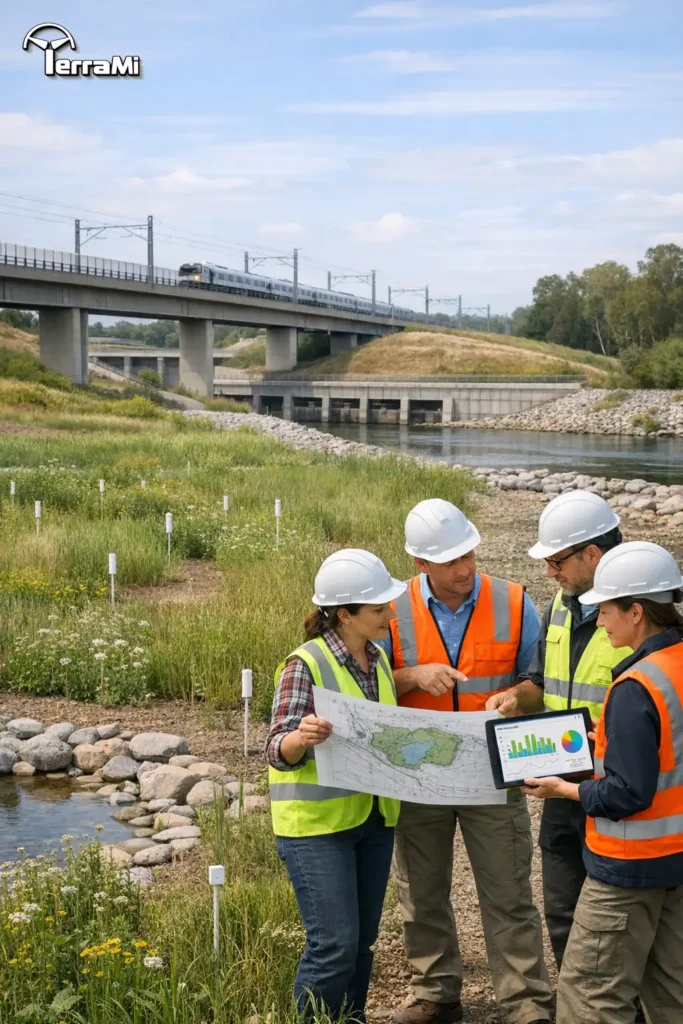
From Mitigation to Measurable Net Gain
Traditional biodiversity management followed the Mitigation Hierarchy: Avoid, Minimize, Restore, Offset. The target was typically “No Net Loss.”
Today, regulators and investors demand quantifiable Net Gain.
Key global frameworks driving this shift include:
- TNFD (Taskforce on Nature-related Financial Disclosures) – particularly the LEAP framework (Locate, Evaluate, Assess, Prepare), requiring companies to identify and disclose nature-related risks.
- EU Biodiversity Strategy for 2030, embedding restoration targets across member states.
- UK Biodiversity Net Gain Regulation (2024), mandating a minimum 10% net gain for new developments using a standardized biodiversity metric.
Under GRI 304 (Biodiversity Standard), infrastructure operators must report habitat impact, species protection measures, and restoration outcomes.
This regulatory convergence makes Nature-Positive Infrastructure not optional—but financially material.
Financial Materiality: Biodiversity as Systemic Risk
According to the World Economic Forum, over 50% of global GDP is moderately or highly dependent on nature. Ecosystem collapse directly affects:
- Water security
- Raw material supply
- Climate stability
- Insurance risk pricing
For infrastructure portfolios, biodiversity loss increases:
- Flood exposure
- Heat island intensity
- Litigation risk
- Capital cost via ESG re-rating
A highway that fragments wetlands may face escalating flood liabilities within 15–20 years—undermining long-term IRR.
Nature-Positive Infrastructure reduces that exposure by embedding ecological functionality into core design.
Strategic Pillars of Nature-Positive Infrastructure
1. Ecological Connectivity and Fragmentation Science
Linear assets—roads, rail, pipelines—are primary drivers of habitat fragmentation.
A data-driven approach includes:
- AI migration corridor modeling
- Wildlife overpasses positioned using geospatial hotspot analysis
- Culverts engineered to maintain sediment transport and aquatic continuity
Under the UK BNG Metric 4.0, habitat distinctiveness, condition, and connectivity are numerically scored—turning biodiversity into a measurable asset class.
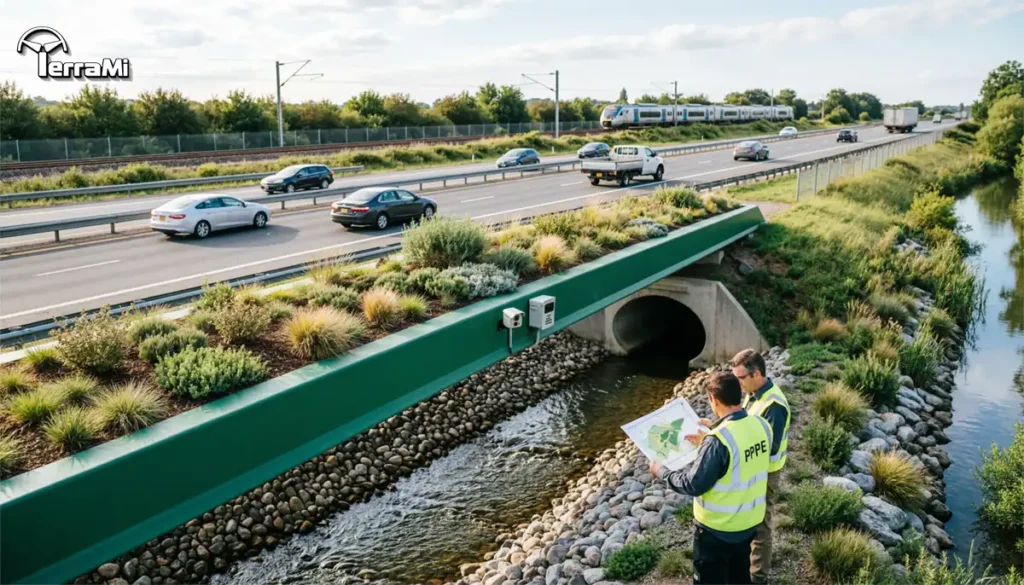
2. Nature-Based Solutions as Core Infrastructure
Nature-Based Solutions (NbS) outperform traditional grey systems in lifecycle resilience.
Examples include:
- Mangrove restoration replacing concrete sea walls
- Reconnected floodplains reducing peak discharge loads
- Urban tree corridors reducing heat stress
The Netherlands’ “Room for the River” program demonstrated that floodplain restoration reduced extreme flood risk while improving biodiversity and spatial quality.
Singapore’s “City in Nature” strategy integrates green corridors and biophilic drainage systems, measurably reducing urban heat island effects.
Unlike static concrete systems, NbS are adaptive and self-regenerating.
3. Upstream Biodiversity Footprint: Materials and Extraction
Infrastructure biodiversity impact begins at extraction.
Sand mining, quarrying, and timber harvesting are major global biodiversity drivers.
A Nature-Positive Infrastructure strategy integrates:
- Circular material flows (recycled aggregates, urban mining)
- Blockchain-based timber traceability
- Satellite monitoring of supply chains
For deeper integration of circular procurement and material traceability, see TerraMi’s approach to sustainable supply chain optimization:
AI, Digital Twins, and Continuous Ecological Monitoring
At TerraMi, technology bridges ecology and engineering.
Nature-Positive Infrastructure requires predictive capability over 30+ year asset lifecycles.
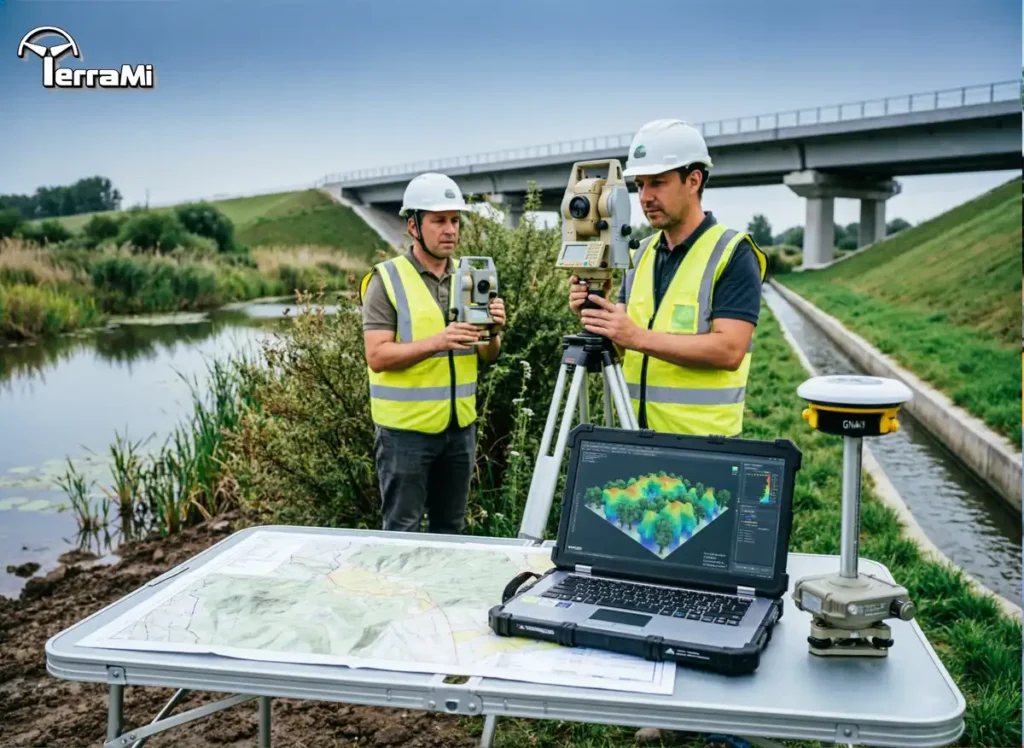
AI-Enhanced Spatial Intelligence
Multi-spectral satellite imagery + LiDAR + machine learning enable:
- Real-time vegetation health scoring
- Corridor fragmentation analysis
- Land-use change detection
Bioacoustic Monitoring and KPI Integration
Automated Recording Units (ARUs) combined with ML species recognition generate:
- Species richness index
- Habitat activity density
- Seasonal biodiversity scoring
These metrics can be embedded into ESG dashboards—linking biodiversity directly to investor reporting frameworks such as TNFD and GRI.
Climate-Resilient Habitat Modeling
Predictive climate modeling ensures:
- Selected species remain viable under 2050 scenarios
- Wetlands withstand altered precipitation patterns
- Urban forestry survives temperature extremes
This is where Digital Twins become operational—not aesthetic.
Risk Scenario: The Cost of Ignoring Nature
Consider a transport corridor built without biodiversity modeling:
- Wetland fragmentation increases downstream flood frequency
- Insurance premiums escalate
- Local opposition triggers litigation delays
- Carbon offsets fail to compensate for ecosystem loss
- Asset valuation declines under TNFD-aligned disclosures
Over a 25-year concession, these risks materially reduce project IRR.
Nature-Positive Infrastructure is therefore a risk mitigation strategy—not a sustainability add-on.
Overcoming Implementation Challenges
The Maintenance Fallacy
High-maintenance “green features” often undermine ESG claims.
Effective design prioritizes:
- Native species
- Drought-resistant vegetation
- Autonomous ecological succession
Reducing OPEX strengthens lifecycle cost models.
Natural Capital Accounting
Ecosystem services can be monetized:
- Forest filtration vs. water treatment CAPEX
- Floodplain storage vs. levee expansion
- Pollinator networks vs. crop productivity loss
By assigning economic value to ecosystem services, biodiversity becomes financially legible.
Legal and Liability Frameworks
Living infrastructure is dynamic.
Contracts must define:
- Performance thresholds
- Climate contingency scenarios
- Shared ecological risk allocation
Standardized biodiversity metrics reduce legal ambiguity.
Conclusion: Engineering the Next Standard
Nature-Positive Infrastructure represents the maturation of ESG.
It integrates:
- Biodiversity Net Gain
- AI-enabled monitoring
- Natural capital accounting
- Climate resilience
Infrastructure is no longer separate from nature—it is embedded within ecological systems.
The next generation of global assets will not merely comply with ESG standards—they will regenerate ecosystems while delivering durable financial returns.
FAQ – Nature-Positive Infrastructure (SEO Optimized)
What is Nature-Positive Infrastructure?
Nature-Positive Infrastructure refers to infrastructure projects designed to deliver measurable Biodiversity Net Gain, restoring and enhancing ecosystems rather than merely minimizing harm.
How is Biodiversity Net Gain measured?
It is measured using standardized biodiversity metrics (e.g., UK BNG Metric 4.0) that assess habitat distinctiveness, condition, and connectivity before and after development.
Why is Nature-Positive Infrastructure important for investors?
Investors increasingly assess biodiversity risk under TNFD and ESG frameworks. Nature integration reduces regulatory exposure, insurance risk, and long-term asset volatility.
Are Nature-Based Solutions cheaper than grey infrastructure?
While initial CAPEX may vary, lifecycle costs of Nature-Based Solutions are often lower due to self-healing capacity and reduced maintenance requirements.
How does AI support biodiversity integration?
AI enables continuous monitoring via satellite imaging, bioacoustics, and predictive climate modeling—turning biodiversity into a measurable KPI.