
Strategic Decarbonization: Integrating ESG Principles into Large-Scale Infrastructure Orchestration
The global shift toward sustainable development has transitioned from a corporate preference to a non-negotiable mandate, placing sustainable infrastructure and ESG integration at the core of modern capital projects. For organizations like TerraMi, the challenge lies not just in adopting green policies but in the technical orchestration of material flows and carbon accounting. As we navigate 2026, the convergence of lifecycle carbon modeling, predictive analytics, and digital assessment frameworks is enabling a more granular approach to reducing the environmental footprint of heavy industry.
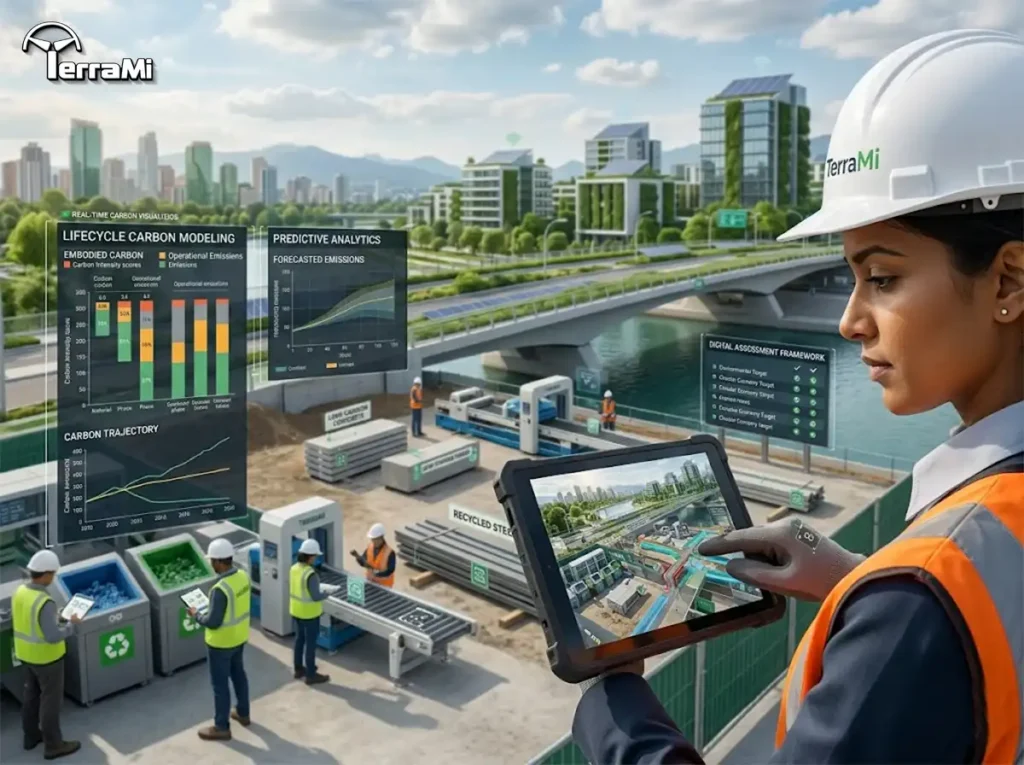
According to the International Energy Agency (IEA), the buildings and construction sector continues to account for a significant share of global energy-related carbon emissions, increasing pressure on infrastructure stakeholders to adopt measurable decarbonization frameworks rather than symbolic sustainability commitments. This article explores how data-driven insights are reshaping the economics of circularity while ensuring long-term institutional value.
The Evolution of Sustainable Infrastructure and ESG Integration in 2026
To understand the current landscape, one must analyze the shift from compliance-based reporting to performance-driven outcomes. Sustainable infrastructure and ESG integration now demand a 360-degree view of the supply chain, moving beyond simple carbon offsets toward integrated lifecycle accountability strategies.
This evolution involves localizing material sourcing, improving procurement transparency, and implementing lifecycle emissions tracking frameworks capable of evaluating the embodied carbon impact of concrete, steel, and structural systems before construction even begins. Institutional investors are no longer satisfied with qualitative sustainability narratives; they increasingly require quantitative evidence of climate resilience, operational durability, and regulatory adaptability.
By embedding Environmental, Social, and Governance (ESG) metrics into the earliest stages of pre-feasibility and infrastructure planning, project leaders can better mitigate the risks associated with stranded assets, volatile supply chains, and evolving regulatory frameworks across North America and Europe.
Technical Frameworks Enabling Sustainable Infrastructure and ESG Integration
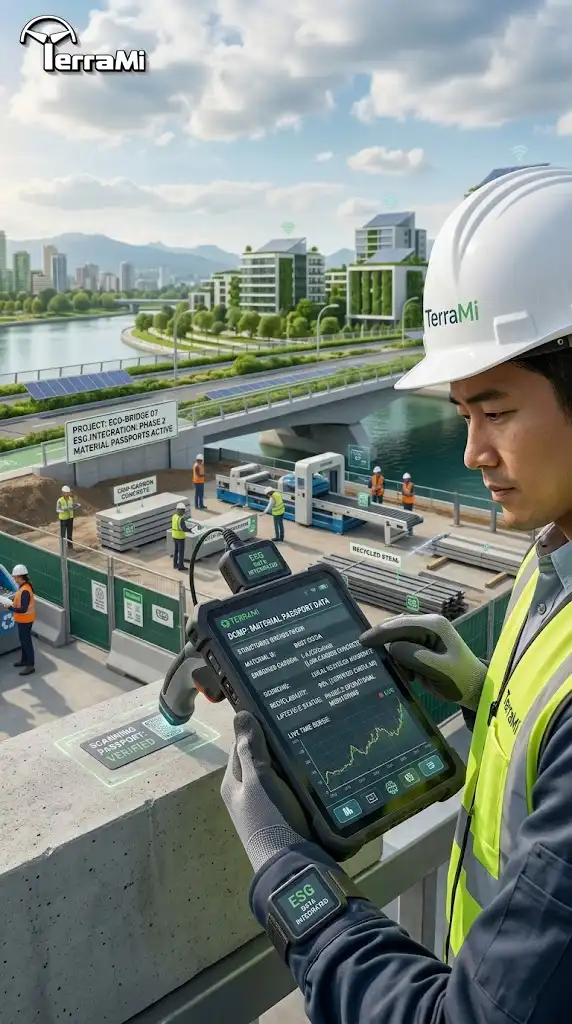
The implementation of these strategies requires a robust digital backbone. Digital Construction Material Passports (DCMP) have emerged as a critical tool in this domain. These systems enable asset owners and project operators to track the embodied carbon, sourcing origin, recyclability, and lifecycle performance of structural components across decades of operation.
Within the broader context of sustainable infrastructure and ESG integration, material passports support long-term circularity by transforming buildings and infrastructure assets into traceable material banks rather than future demolition waste. This transition aligns closely with emerging circular economy frameworks promoted by the World Economic Forum and other international sustainability institutions focused on resource resilience and lifecycle optimization.
Furthermore, sensor-integrated predictive maintenance systems are extending the operational life of existing infrastructure assets by combining real-time performance monitoring with lifecycle deterioration analytics. In practical terms, this allows operators to optimize maintenance intervals, reduce premature component replacement, and lower the embodied carbon impact associated with large-scale rehabilitation projects.
The growing convergence between digital infrastructure intelligence and sustainability planning is also reshaping how engineering teams approach asset management. Through integrated monitoring environments and lifecycle data frameworks, infrastructure operators are increasingly able to transition from reactive maintenance models toward predictive operational ecosystems.
This transition becomes even more powerful when combined with Building Information Modeling (BIM) and digital lifecycle coordination strategies capable of connecting procurement, construction, operations, and ESG reporting into a unified infrastructure intelligence framework.
Data-Driven Decision Making in Circular Economies
The economics of circularity are fundamentally dependent on the quality of data. Historically, fragmented construction workflows contributed to substantial material inefficiencies, limited traceability, and avoidable carbon-intensive waste streams across major infrastructure programs.
Today, the integration of BIM-based coordination systems with ESG-focused analytics platforms enables real-time monitoring of material utilization, procurement efficiency, and waste generation patterns throughout the project lifecycle. This enhanced visibility allows infrastructure stakeholders to identify operational inefficiencies earlier and implement measurable sustainability interventions before cost escalation occurs.
More importantly, this data-driven approach also strengthens the “Social” dimension of ESG integration. By improving transparency throughout the supply chain, organizations can better verify ethical sourcing practices, labor standards, and community engagement metrics — factors that are increasingly essential for securing the long-term social license to operate in complex jurisdictional environments such as Canada and the GCC.
As ESG reporting expectations become more sophisticated, infrastructure organizations capable of integrating operational intelligence with governance transparency will gain a measurable strategic advantage in procurement competitiveness, investor confidence, and regulatory resilience.
Conclusion: The Path Forward for TerraMi Insights
As we look toward the next decade of infrastructure development, the relationship between sustainability, operational resilience, and digital lifecycle intelligence will only deepen. Sustainable infrastructure and ESG integration is no longer a static compliance objective but a continuous process of optimization across planning, procurement, construction, and long-term asset performance.

Organizations seeking resilient infrastructure strategies must increasingly align decarbonization objectives with lifecycle intelligence, operational transparency, and integrated governance models. Related insights can also be explored in TerraMi’s analysis of governance frameworks in high-risk infrastructure delivery environments.
At TerraMi, we view sustainable infrastructure and ESG integration not as isolated compliance exercises, but as interconnected operational systems requiring continuous lifecycle orchestration. As infrastructure complexity accelerates across North America and global markets, organizations capable of integrating sustainability intelligence with engineering execution will be best positioned to deliver resilient, future-ready assets.