The Future of Terrami:
Sustainability, Circular Solutions, Resilience & ESG in 2026
Laying the Groundwork for a Transformative Year
As 2026 begins, the infrastructure sector stands at a pivotal crossroads, with sustainable infrastructure becoming central to global climate action and long-term development. The recent COP30 climate summit in Belém, Brazil, underscored just how urgent this global call has become. Negotiators, civil society, and business leaders converged in the Amazon, a powerful symbolic backdrop, to discuss emissions reductions, climate finance, and ecological justice.
For Terrami, this is more than a moment, it’s a mandate. In 2026, we are committed to translating high-level commitments into concrete infrastructure outcomes: projects that are resilient, low-carbon, socially equitable, and future-oriented.
Why 2026 Represents a Strategic Turning Point
Three dynamics converged at COP30 that now shape infrastructure’s near-term horizon, and Terrami’s strategy for the coming year:
- COP30’s Global Imperative
Held in Belém amid the Amazon rainforest — a symbolic choice — COP30 involved intense negotiation on climate finance, fossil fuel phase-out, and adaptation.
Brazil’s presidency pushed for stronger commitments on adaptation, forest conservation, and just transitions.
- Accountability over Ambition
While past conferences often focused on pledges, COP30 signaled increasing demand for measurable, verifiable action.
For infrastructure actors, this means ESG is no longer peripheral it’s core business.
- A Digital, Resilient and Circular Charge
Infrastructure must evolve with data, automation, and lifecycle thinking at its heart. The global momentum for climate-smart infrastructure aligns directly with Terrami’s capabilities and vision.
Embedding ESG Into Infrastructure: Performance, Not Posture
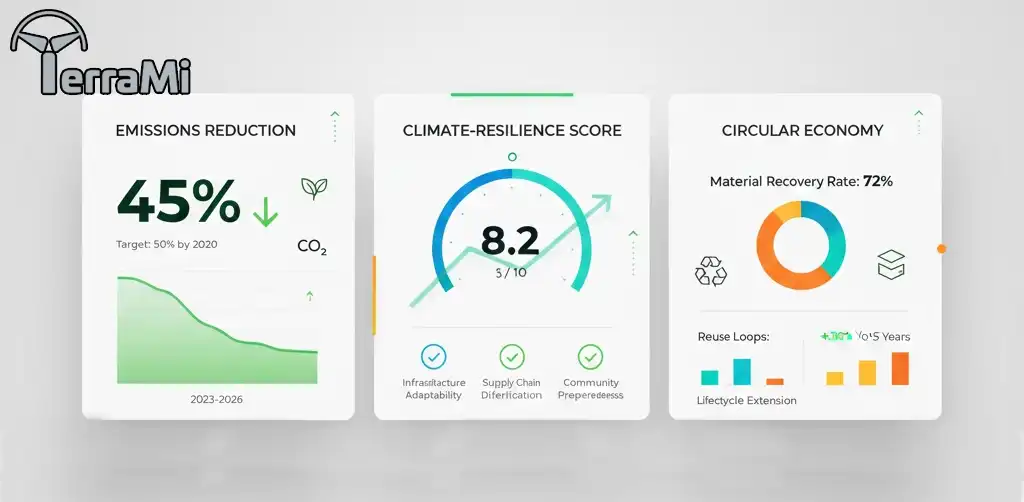
In 2026, ESG is no longer just about disclosure or commitments, it is about operational integration and performance.
Key Pillars of Terrami’s ESG-Driven Infrastructure:
- Embedded Strategy: ESG criteria will inform everything — procurement, materials, energy systems, staffing, and even strategic decisions.
- Lifecycle Mindset: Projects must consider reuse, waste minimization, virgin Resources and circular material flows.
- Quantifiable Outcomes: We will prioritize metrics like CO₂ emissions reductions, waste diversion, social equity, and good governance with rigorous data tracking.
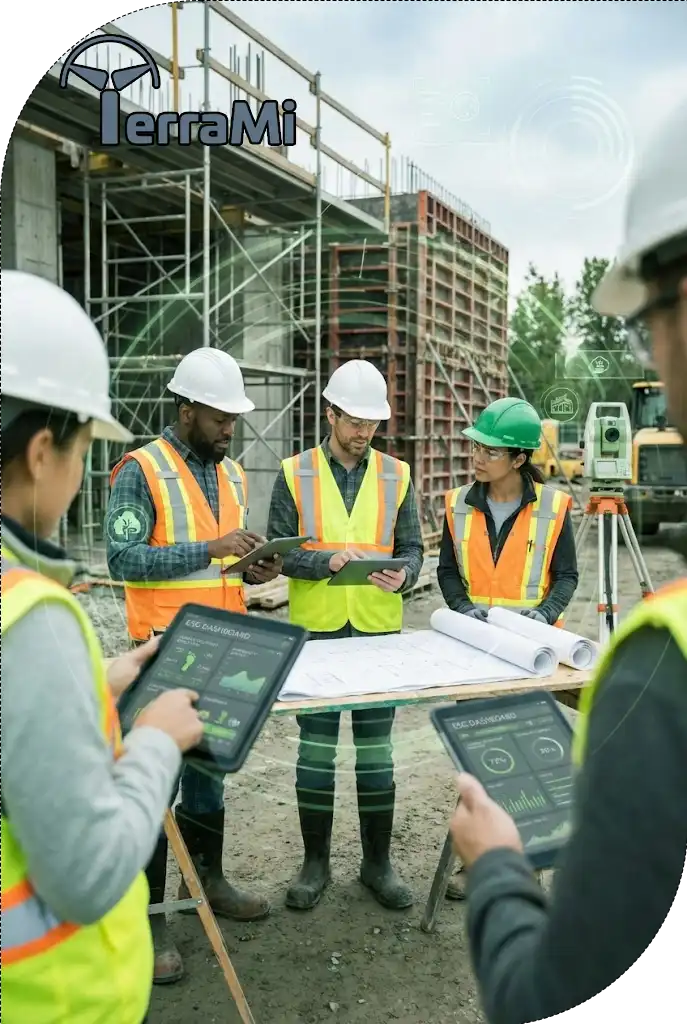
- Continuous Monitoring: Real-time digital platforms, predictive analytics, and digital-twin models will help keep performance on track.
Resilience as Infrastructure’s New Baseline
2026 demands that resilience becomes a foundational criterion for every infrastructure project — not the exception. Terrami will focus on:
- Adaptive design resistant to climate shocks (storms, flooding, heat stress)
- Low-carbon, high-durability systems that perform under pressure
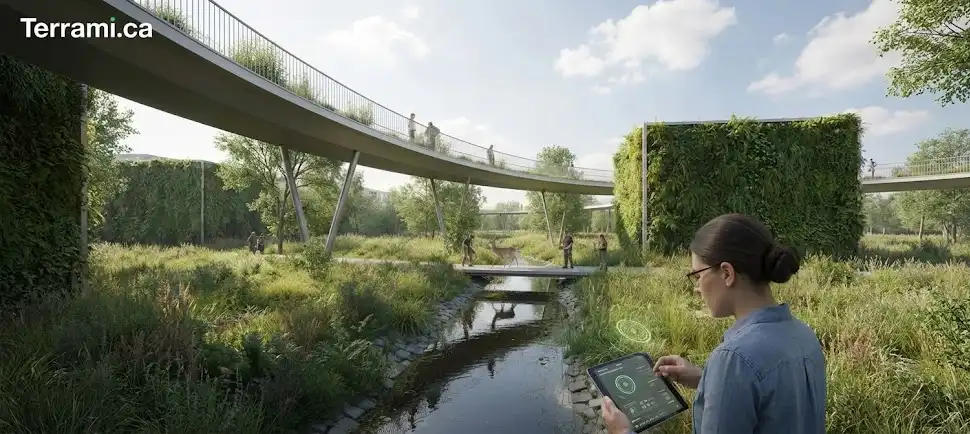
- Nature-based resilience: integrating ecosystems, green infrastructure, and regenerative practices
- Material resilience: using circular resources, recycled materials, and modular design to reduce dependency and minimize Environmental FootPrint
These are not optional add-ons. They’re increasingly non-negotiable for financiers, governments
Digital Tools Driving Real ESG Impact
Data is no longer just a byproduct — it’s the backbone of ESG-enabled infrastructure.
In 2026, Terrami is accelerating its investment and advisory in:
- Cloud-based ESG data platforms that unify metrics across projects
- Digital twins for predictive simulation (climate stress, resource flow, performance)
- IoT & sensors to monitor emissions, energy consumption, and structural health in real time
- Material-tracking systems for circular procurement and waste management
- Geospatial analytics to map environmental exposure and biodiversity impacts
These tools allow Terrami to turn raw data into actionable insights — empowering clients to make informed decisions, optimize operations, and transparently communicate impact.
Circular Infrastructure: Designing for Regeneration
Circularity is no longer future talk — it’s a 2026 imperative in infrastructure planning. Key approaches Terrami will champion this year:
- Material reuse and recovery: Reclaiming construction materials, using recycled and bio-based inputs
- End-of-life planning: Designing components for disassembly, reuse, or recycling
- Resource-efficient design: Minimizing waste, energy consumption, and resource depletion
- Circular business models: Exploring public-private partnerships, take-back contracts, and shared infrastructure value
By centering circularity, Terrami not only reduces environmental burden but also builds resilient, cost-effective, and future-proof infrastructure.
Social Equity & Community Trust: ESG’s Human Core
As infrastructure stewards, Terrami recognizes that its work must serve people — now and in the future. In 2026, we’re raising our ambition on:
- Worker safety and well-being: Prioritizing fair labor practices, health, and inclusion
- Equitable procurement: Engaging with underrepresented communities, local suppliers, and marginalized groups
- Transparent governance: Encouraging stakeholder participation, shared decision-making, and clear reporting
- Community engagement: Ensuring infrastructure projects generate social value, not just physical assets
These efforts build trust, resilience, and long-term legitimacy — especially as climate risk and social risk become deeply intertwined.
Nature-Positive Infrastructure: From Footprint to Regeneration
2026 offers a decisive opportunity to embed nature-positive outcomes into infrastructure design. Terrami’s plan includes:
- Ecosystem restoration: Partnering with ecologists and local communities to restore natural habitats as part of development
- Green infrastructure: Building living walls, permeable surfaces, urban forests, and wetland-based flood protection
- Biodiversity metrics: Measuring and reporting on species recovery, ecological connectivity, and ecosystem services
- Carbon & conservation finance: Exploring mechanisms to fund projects that deliver both climate mitigation and nature restoration
By doing so, Terrami will help its partners achieve dual goals: infrastructure that supports human needs and restores ecological systems.
Strategic Focus for 2026: Terrami’s Action Plan
In response to the global momentum, Terrami’s 2026 roadmap will center on:
- Performance-driven ESG consulting — Helping clients translate Environmental and Social climate commitments into measurable Governance action
- Resilience-first design — Embedding climate adaptation at the core of project planning
- Circular systems — Advising clients to minimize Environmental Footprint and maximize resource regeneration
- Digital empowerment — Deploying data tools that drive continuous improvement
- Community-led impact — Ensuring equity, inclusion, and local trust in every project
- Nature-positive partnerships — Collaborating with ecological stakeholders to maximize biodiversity benefits
Conclusion: Embracing 2026 as Terrami’s Year of Impact
Terrami enters 2026 not just as a sustainability advisor, but as a catalyst for real, measurable change. With the lessons and urgency emerging from COP30 in Brazil, we are more committed than ever to shaping infrastructure that is resilient, just, and regenerative.
This Insight article is just the beginning of a series — in the coming months, we will explore each pillar in depth: from ESG performance to digital systems, resilience frameworks, circular strategies, and nature-positive design.
Join us on this journey — as Terrami helps build infrastructure that meets the moment and shapes a better and peaceful future.