
Digital Tools for ESG Data Management: Navigating the Future of Sustainable Infrastructure
The Modern Imperative: Why Digital Tools for ESG Data Management are Non-Negotiable
In the current global economic landscape, the infrastructure sector stands at a critical juncture. As the world pivots toward net-zero targets, the demand for transparency in Environmental, Social, and Governance (ESG) performance has shifted from a “nice-to-have” corporate social responsibility (CSR) initiative to a mandatory operational requirement. For organizations like TerraMi, the integration of digital tools for ESG data management is not merely about compliance; it is about creating a resilient framework for future-ready assets. The complexity of modern infrastructure projects—often involving multi-national supply chains and decade-long lifecycles—renders traditional manual data collection methods obsolete. To achieve true thought leadership in this space, we must recognize that data integrity is the new currency of infrastructure finance.
Breaking the Silos: The Architecture of Integrated ESG Ecosystems
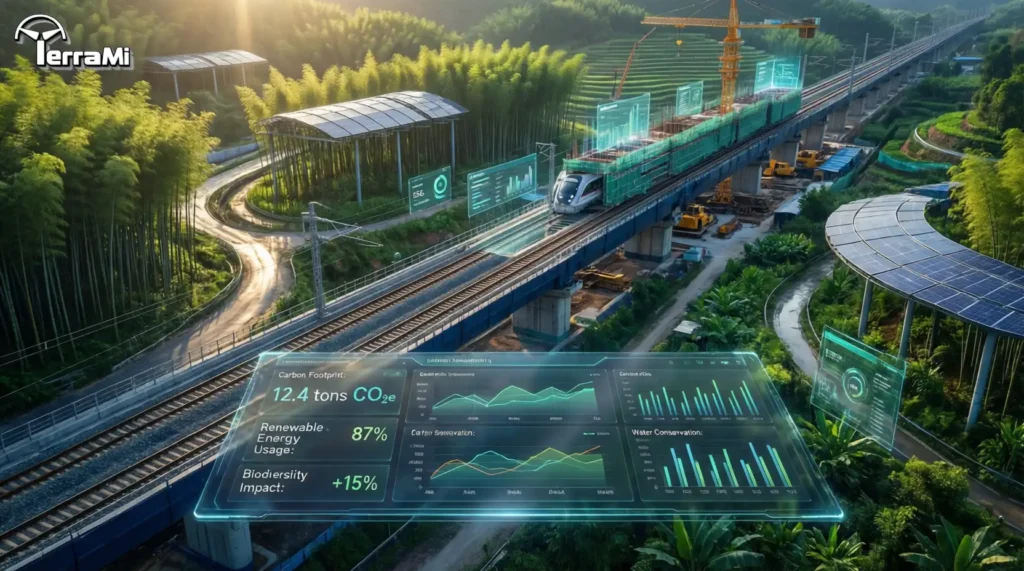
One of the primary reasons projects fail to meet sustainability benchmarks is the fragmentation of data. Historically, environmental data lived in spreadsheets held by site engineers, while social impact metrics were buried in HR reports. Digital tools for ESG data management serve as the “connective tissue” that bridges these silos. By implementing centralized cloud-based platforms, project developers can ensure a single version of the truth. This architectural shift allows for:
- Horizontal Integration: Connecting various project phases from design to decommissioning.
- Vertical Integration: Ensuring that raw data from on-site sensors flows seamlessly up to executive-level dashboards.
- Interoperability: Utilizing API-driven ecosystems that allow different software tools to communicate, ensuring that digital tools for ESG data management remain flexible as new technologies emerge.
The Role of Automation and IoT in Data Fidelity
The “G” in ESG—Governance—is often the hardest to quantify without technology. Digital tools for ESG data management leverage the Internet of Things (IoT) to remove the “human error” factor. On a smart construction site, IoT-enabled heavy machinery provides real-time telemetry on fuel consumption and idle times. This data is fed directly into ESG software, providing an indisputable record of Scope 1 emissions. Furthermore, automation allows for “Continuous Auditing.” Instead of an annual scramble to produce a sustainability report, these digital tools for ESG data management provide a 365-day view of performance. This level of granularity is what attracts high-tier institutional investors who prioritize low-risk, high-transparency projects.
Artificial Intelligence: The “Intelligence” in ESG Data Management
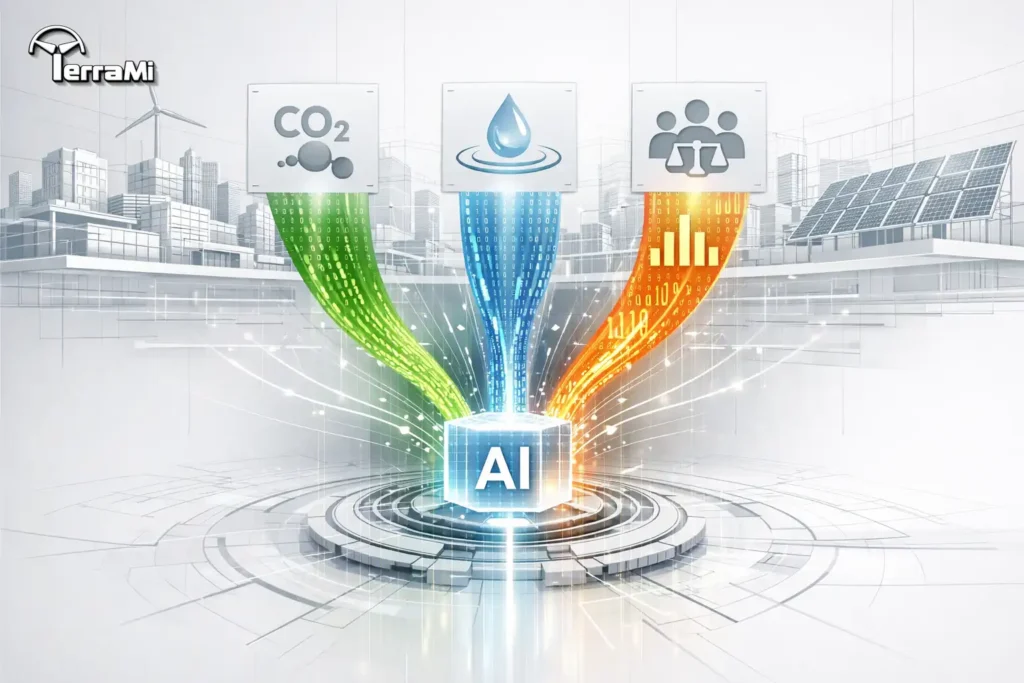
At TerraMi, we emphasize the intersection of AI and infrastructure. Standard digital tools for ESG data management tell you what happened yesterday; AI-powered tools tell you what will happen tomorrow.
- Predictive Carbon Analysis: Machine learning models can analyze vast datasets from previous projects to predict the carbon footprint of a new design before a single brick is laid.
- Anomaly Detection: AI can scan thousands of data points across a supply chain to identify “red flags” in labor practices or environmental non-compliance that a human auditor might miss.
- Scenario Simulation: Using Digital Twins integrated with digital tools for ESG data management, stakeholders can simulate the impact of extreme weather events on an asset’s ESG rating over a 50-year horizon.
Social and Governance: Quantifying the “Intangibles”
While environmental metrics are often easier to digitize, the “Social” aspect of ESG—workforce well-being, equity, and safety—is equally critical. Modern digital tools for ESG data management now include modules for tracking workforce demographics, site safety incidents in real-time, and community engagement metrics. For instance, using blockchain technology within these tools can verify that every worker in the supply chain is being paid a fair wage, providing a level of social governance that was previously impossible to track.

Financial Impacts: How Data Management Lowers the Cost of Capital
There is a direct correlation between the sophistication of an organization’s digital tools for ESG data management and its ability to secure favorable financing. Green bonds and sustainability-linked loans often come with “step-down” interest rates if specific ESG KPIs are met. Without robust digital tracking, proving these achievements to lenders is arduous and prone to dispute. By digitizing the data trail, infrastructure firms can demonstrate a lower risk profile, effectively turning their ESG performance into a financial asset.
Overcoming Implementation Barriers: The Path to Maturity
Transitioning to advanced digital tools for ESG data management is not without challenges. It requires a cultural shift within the organization and a significant initial investment in digital literacy. However, the cost of inaction—ranging from “greenwashing” scandals to being locked out of capital markets—is far higher. Organizations must adopt a phased approach:
- Assessment: Identifying existing data gaps and legacy systems.
- Pilot Programs: Deploying digital tools for ESG data management on a single high-impact project to demonstrate ROI.
- Scaling: Rolling out the digital framework across the entire portfolio.
Conclusion: Data as the Foundation of Sustainable Legacy
The infrastructure we build today will define the world of 2050. To ensure these assets are sustainable, equitable, and profitable, we must master the data that describes them. Digital tools for ESG data management are the bridge between the physical world of steel and concrete and the digital world of accountability and insight. For TerraMi, the goal remains clear: use technology to illuminate the path toward a nature-positive and carbon-neutral future.

Consult with TerraMi for Smart Infrastructure Excellence
Navigating the complexities of ESG digitalization requires more than just software; it requires a strategic partner who understands the pulse of modern infrastructure. Whether you are looking to audit your current data frameworks or execute an AI-driven ESG roadmap, TerraMi’s specialists are here to guide your transition. We combine deep engineering expertise with cutting-edge data intelligence to ensure your projects are not only compliant but industry-leading.