
The Human Side of ESG: Workforce Well-Being and Equity in Infrastructure
Beyond Concrete: The Social Imperative in Infrastructure
For decades, the success of infrastructure projects was measured solely by engineering precision and financial ROI. However, as the Environmental, Social, and Governance (ESG) framework matures, the “S” (Social) has moved from a secondary consideration to a primary driver of project viability. In 2026, workforce well-being and equity in infrastructure are no longer just HR concerns; they are strategic indicators of operational resilience.
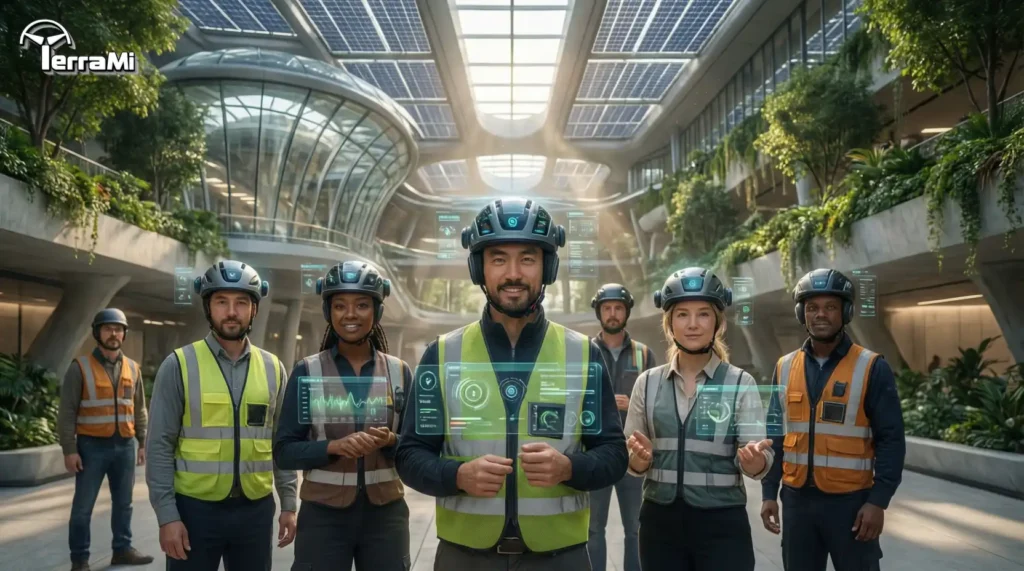
At TerraMi, we believe that a project’s legacy is defined not only by the durability of its structures but by the health, safety, and inclusion of the people who build and maintain them. Global infrastructure spending is projected to reach $9 trillion annually by 2027, yet the industry faces a critical labor shortage. Addressing the “Social” pillar is the only way to attract the next generation of talent.
Defining the Social Pillar: Equity and Inclusion
Equity in the context of infrastructure goes beyond simple diversity hiring. It encompasses the creation of an environment where systemic barriers are removed for underrepresented groups. Recent data from the Global Infrastructure Hub suggests that projects with high social equity scores experience 15% fewer community-led delays.
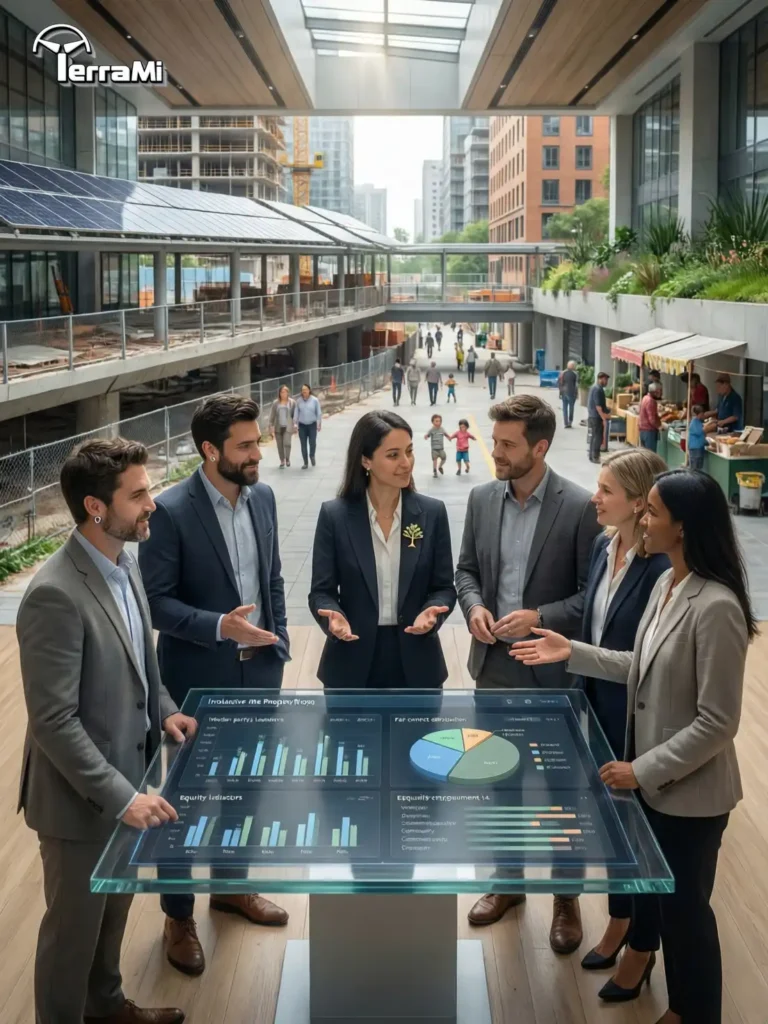
- Inclusive Procurement: This involves ensuring that Small and Medium Enterprises (SMEs) and minority-owned businesses have a fair share in the supply chain. By diversifying the vendor pool, lead contractors reduce single-source dependency risks.
- Gender Parity: The construction and engineering sectors still see female participation rates as low as 12-15% globally. TerraMi advocates for targeted leadership programs and site facilities designed for a diverse workforce to bridge this historical gap.
- Pay Equity: Utilizing AI-driven data audits allows firms to ensure that compensation is based on skill and contribution rather than demographic factors.
According to theInternational Labour Organization (ILO), companies in the top quartile for gender diversity are 25% more likely to have above-average profitability.
The Role of Technology and AI in Workforce Well-Being
As a leader in AI-driven infrastructure insights, TerraMi recognizes that technology is the greatest ally of the modern worker. We are transitioning from “Protection” to “Prevention.”
- Wearable Safety Tech: IoT-enabled helmets and vests monitor heart rates and detect falls in real-time. In high-heat environments, these devices provide early warnings for heatstroke, a leading cause of site downtime.
- AI-Powered Mental Health Analytics: Predictive algorithms can now analyze anonymized site data—such as overtime patterns and communication lags—to identify signs of burnout. This allows for proactive intervention before safety is compromised.
- VR/AR Training: Immersive technology allows workers to master high-risk tasks in a virtual environment. Statistics show that VR-trained workers have a 70% higher retention rate of safety protocols compared to traditional classroom learning.
Mental Health: The Silent KPI
Infrastructure projects are high-pressure environments. The industry has historically overlooked the mental health of its workers, yet the suicide rate in construction is nearly 4 times higher than the general population in many developed nations. A thought leadership approach demands that we treat mental health as a core KPI.
- Psychological Safety: Moving beyond physical PPE, we must provide “Mental PPE.” This means creating a culture where reporting a near-miss or a mental struggle is rewarded, not penalized.
- Well-being Metrics: It is time to move beyond “Lost Time Injury” (LTI) rates. TerraMi promotes the use of Employee Sentiment Indices and Stress Biometrics as standard project reporting tools.
Equity in Community Impact: The Social License to Operate
The “Social” side of ESG extends to the communities surrounding the project. Large-scale developments often displace local populations or cause economic friction. To mitigate this, we propose a Community Wealth Building model. By leveraging projects to create local jobs and improve adjacent infrastructure—such as schools or clinics—developers secure a “Social License to Operate.” Without this public trust, even the most well-funded projects can face terminal litigation. We have explored the technical side of this stability in our comprehensive analysis, “The Economics of Circularity: Scaling Infrastructure Through Data-Driven Material Flows,” where we specifically detail how Digital Twins and Urban Resilience serve as the backbone for sustainable and community-centric urban planning.
Governance and Social Metrics: Measuring the Intangible
One of the greatest challenges in the social pillar is quantification. Unlike carbon emissions ($CO_2$ equivalents), human well-being is harder to measure. However, modern ESG frameworks are becoming increasingly sophisticated:
- Social ROI (SROI): This method quantifies the social value created per dollar invested. For example, a bridge that reduces commute times for a low-income neighborhood creates a measurable “Social Return” through increased employment accessibility.
- Supply Chain Auditing: TerraMi utilizes blockchain and AI to ensure that the labor standards of the primary contractor are upheld by every subcontractor, preventing modern slavery and wage theft in complex global supply chains.
The Economic Case for the Human Side of ESG
Investing in workforce well-being is not just an ethical choice; it is a financial imperative. Data from the World Economic Forum indicates that for every $1 invested in employee well-being, there is a $2.30 return in increased productivity and reduced healthcare costs.
- Higher Retention: Reducing turnover in specialized engineering can save firms up to 200% of an annual salary in replacement costs.
- Lower Insurance Premiums: Safer, AI-monitored sites lead to fewer claims and lower operational risks, directly impacting the bottom line.
Conclusion: A New Blueprint for Infrastructure
The future of the infrastructure sector lies in its ability to humanize its operations. By embedding workforce well-being and equity into the very DNA of project design, we create assets that are not only structurally sound but socially transformative.
At TerraMi, we provide the AI-driven analytical tools and ESG frameworks necessary to turn these social imperatives into measurable project successes. From predictive safety analytics to inclusive procurement tracking, our platform is designed to handle the complexities of modern, large-scale infrastructure. We invite you to explore our specialized solutions and see how our technology can elevate your next project.
Visit the TerraMi Product to discover our latest innovations in AI-integrated infrastructure and ESG monitoring tools. Let’s build a future where progress and people move forward together.