
When Smart Infrastructure Becomes Fragile: Understanding Responsible Digitalization Risks
The global infrastructure sector is entering a period of unprecedented technological acceleration. Across ports, logistics corridors, transport systems, energy facilities, and industrial operations, organizations are rapidly integrating automation, AI-driven analytics, predictive maintenance platforms, IoT ecosystems, and digital twins into critical infrastructure environments. The promise is compelling: greater efficiency, lower operational costs, reduced emissions, and improved decision-making at scale.
Yet beneath this transformation lies a growing challenge that many organizations still underestimate: Responsible Digitalization Risks.
At TerraMi, we define Responsible Digitalization Risks as the operational, governance, environmental, and human vulnerabilities that emerge when digital systems evolve faster than the infrastructure ecosystems they are intended to support. While digital transformation is often presented as inherently intelligent and efficient, real-world infrastructure environments are rarely predictable enough to behave exactly as simulations anticipate.
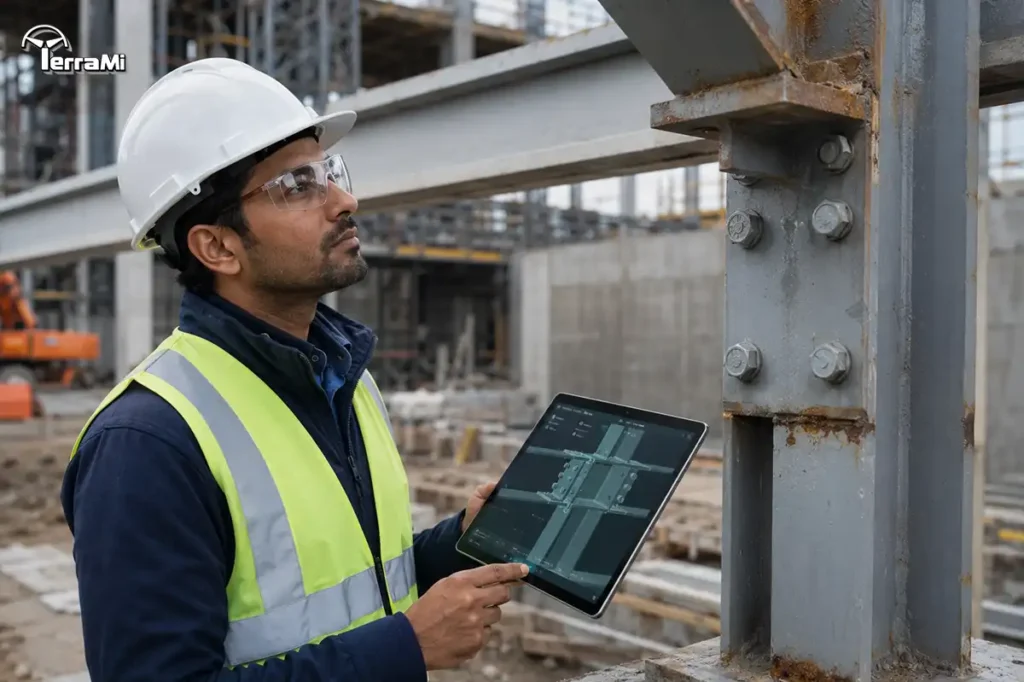
The problem is not digitalization itself. The problem is the assumption that automation alone automatically creates resilience.
In reality, infrastructure systems become fragile when organizations prioritize technological deployment speed over operational adaptability, contextual awareness, and human oversight. The future of infrastructure will not belong to the organizations with the most automation. It will belong to those capable of integrating digital intelligence responsibly into complex physical environments.
The Hidden Gap Between Simulation and Reality
One of the most overlooked dimensions of Responsible Digitalization Risks is the disconnect between controlled simulation environments and real operational conditions.
Digital systems are typically designed, tested, and optimized using structured assumptions. Models are trained on historical patterns, simulations rely on stable parameters, and automated workflows are developed around expected operational behavior. However, infrastructure rarely operates under perfectly stable conditions.
Physical environments introduce unpredictability that algorithms alone may struggle to interpret consistently:
- fluctuating weather patterns
- workforce variability
- equipment degradation
- unexpected operational interactions
- communication interruptions
- environmental interference
- rapidly changing site conditions
In high-complexity infrastructure environments, even small contextual deviations can compound into larger operational instability.
This challenge becomes particularly significant in sectors where automation directly influences safety, logistics continuity, or critical operational sequencing. Systems that perform effectively in controlled testing conditions may encounter entirely different realities once exposed to physical infrastructure ecosystems operating continuously under pressure.
Responsible digitalization therefore requires more than technical performance. It requires environmental adaptability.
Why Infrastructure Requires Human-Centered Automation
One of the most common misconceptions in modern infrastructure strategy is the belief that increased automation automatically reduces operational risk.
In practice, poorly integrated automation can simply relocate risk rather than eliminate it.
When organizations overdepend on centralized dashboards, algorithmic decision-making, or rigid automated workflows, they can unintentionally weaken situational awareness among operational teams. Human operators may begin trusting system outputs without sufficiently questioning whether the underlying assumptions still reflect real-world conditions.
This creates what TerraMi describes as “automation confidence drift.”
As confidence in digital systems increases, active human verification often decreases. Over time, organizations risk developing operational blind spots where anomalies remain undetected because teams assume the system would automatically identify them.
This is why responsible infrastructure digitalization must remain fundamentally human-centered.
The objective should never be to remove human judgment from infrastructure systems. The objective should be to enhance human decision-making with better contextual intelligence.
Organizations that achieve long-term digital resilience are typically those that:
- maintain strong human override capability
- integrate local operational knowledge into digital workflows
- prioritize adaptive decision-making over rigid automation
- continuously validate digital assumptions against physical conditions
- treat operators as active participants rather than passive system monitors
In complex infrastructure ecosystems, human adaptability remains one of the most valuable forms of resilience.
The Environmental Dimension of Responsible Digitalization Risks
Infrastructure automation is deeply influenced by environmental conditions, yet many digital transformation strategies still underestimate environmental variability.
Sensors, predictive systems, AI-driven monitoring tools, and automated operational platforms all depend on stable data quality. However, environmental conditions can significantly influence how those systems perform.
Humidity, vibration, corrosion exposure, electromagnetic interference, extreme temperatures, dust accumulation, unstable terrain conditions, and coastal climate exposure can all affect sensor accuracy, data reliability, and communication integrity.
In highly digitized infrastructure environments, unreliable data can become as dangerous as equipment failure itself.
This is especially important in ports, logistics hubs, energy facilities, mining operations, and transport infrastructure where digital systems increasingly control high-value operational sequences in real time.
Responsible digitalization therefore requires organizations to design systems that are resilient not only technologically, but environmentally.
At TerraMi, we emphasize that digital infrastructure strategy should always account for local physical context. Technology that performs effectively in one operating environment may behave very differently under another set of environmental pressures.
The future of resilient infrastructure automation will depend on systems capable of adapting dynamically to environmental unpredictability rather than assuming stable operating conditions at all times.
Governance Failures and Digital Overconfidence
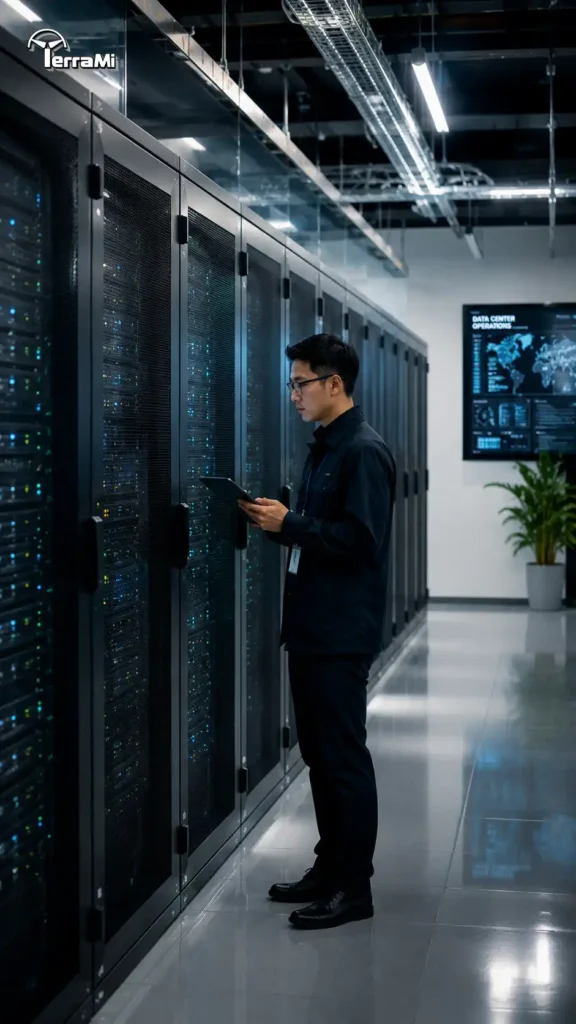
Many Responsible Digitalization Risks do not originate from technology failures alone. They emerge from governance structures that prioritize implementation speed over operational readiness.
In many large-scale organizations, digital transformation programs are evaluated primarily through highly visible metrics:
- deployment timelines
- automation coverage
- system adoption rates
- capital efficiency
- productivity improvements
While these indicators are important, they often fail to measure whether operational resilience is actually improving.
This creates a dangerous governance imbalance. Leadership teams may celebrate digital acceleration while underestimating how rapidly operational dependency on those systems is increasing.
The risk becomes especially severe when governance structures fail to establish clear escalation protocols, accountability layers, or fallback operational procedures.
In highly automated environments, organizations must continuously ask:
- What happens if the system becomes unreliable?
- Can operators still intervene effectively?
- Are teams trained to recognize digital anomalies?
- Does leadership understand the operational limitations of automation?
- Can infrastructure continue functioning safely during system degradation?
Responsible digitalization requires governance systems capable of treating technology as an operational partner—not an unquestionable authority.
Case Study: Digital Context in Automated Logistics Centers
As industrial infrastructure moves toward increasingly automated logistics and port operations, many organizations are discovering that digital performance in controlled environments does not always translate reliably into real-world operational conditions. Across several automated terminal initiatives in Asia, industry reports have highlighted how environmental variables—such as tropical humidity, coastal corrosion exposure, and unstable sea-level conditions—created operational inconsistencies that were not fully anticipated during simulation and testing phases.
These gaps revealed an important reality: automation systems are highly effective at managing predictable processes, but often struggle when physical site conditions evolve faster than algorithmic assumptions. In some deployments, sensor instability, data interference, and environmental variability reduced operational reliability during early implementation phases, forcing operators to reintroduce higher levels of human oversight and adaptive control.
At TerraMi, we view this challenge through the lens of Responsible Digitalization Risks. Digital transformation becomes truly resilient only when infrastructure systems are designed to incorporate local environmental context, operational unpredictability, and real-time human intervention capabilities alongside automated decision-making frameworks.
This is why TerraMi emphasizes the integration of adaptive edge computing, contextual monitoring, and human-centered operational governance into digital infrastructure systems. By studying these industry-wide implementation challenges, we help partners avoid overreliance on rigid automation logic and build operational ecosystems capable of responding dynamically to real-world conditions.
Responsible Digitalization and ESG 2.0
Under emerging ESG 2.0 frameworks, digital transformation is increasingly evaluated not only by efficiency gains, but by its long-term operational and social consequences.
Organizations are now expected to demonstrate that digital infrastructure systems:
- improve resilience rather than increase fragility
- strengthen operational transparency
- protect workforce safety
- support environmental accountability
- maintain ethical governance standards
- preserve human oversight in critical operational functions
This is where Responsible Digitalization Risks intersect directly with ESG governance.
A highly automated system that lacks resilience, transparency, or human accountability may improve short-term efficiency while simultaneously increasing long-term systemic exposure. Investors, regulators, insurers, and infrastructure stakeholders are becoming increasingly sensitive to these risks.
At TerraMi, we believe responsible digitalization is fundamentally a governance issue as much as a technological one. Sustainable infrastructure transformation depends on leadership systems capable of balancing automation efficiency with operational reliability and human adaptability.
Building Adaptive Infrastructure Systems
To reduce Responsible Digitalization Risks, infrastructure organizations must move beyond purely technology-centered transformation models.
TerraMi recommends a five-part strategy for responsible infrastructure digitalization:
Context-Aware System Design
Digital systems should be calibrated to local operational and environmental realities rather than relying exclusively on generalized deployment assumptions.
Human-in-the-Loop Governance
Critical operational decisions should always preserve meaningful human oversight and intervention capability.
Adaptive Edge Computing
Infrastructure systems should process operational intelligence close to the physical environment itself, enabling faster localized response to changing conditions.
Operational Stress Testing
Organizations should regularly test how digital systems behave under degraded, unstable, or unpredictable operating conditions.
Cross-Functional Risk Governance
Digital transformation should involve engineering, operations, cybersecurity, ESG leadership, workforce planning, and infrastructure risk specialists working within a unified governance structure.
Together, these principles help organizations build digital ecosystems that remain resilient even when physical operating conditions become volatile.
Conclusion: Digital Intelligence Must Remain Operationally Grounded
The future of infrastructure will undoubtedly be more automated, more connected, and more data-driven. But increased digitalization alone does not guarantee resilience.
Without operational context, adaptive governance, and human-centered system design, digital transformation can unintentionally create new layers of fragility inside already complex infrastructure ecosystems.
Responsible Digitalization Risks are therefore not barriers to innovation. They are signals that infrastructure modernization must evolve more intelligently.
At TerraMi, we help organizations bridge the gap between technological ambition and operational reality. Because in critical infrastructure environments, the most advanced systems are not the ones that automate everything. They are the ones capable of adapting safely, transparently, and reliably to the unpredictability of the real world.