
Circular Economy at the Execution Stage: Overlooked Challenges
The transition from theoretical sustainability to practical application is where most infrastructure projects falter. While the concept of a “closed-loop” system is celebrated in boardroom strategy meetings, the reality of Circular Economy Execution Challenges on an active construction site is far more complex. At TerraMi, we observe a significant disconnect between high-level circularity goals and the gritty, logistical realities of the execution stage. To build truly sustainable infrastructure, we must move beyond the rhetoric and address the systemic barriers that prevent material circularity from becoming an operational standard.
The Logistics of Circularity: Beyond the Blueprint
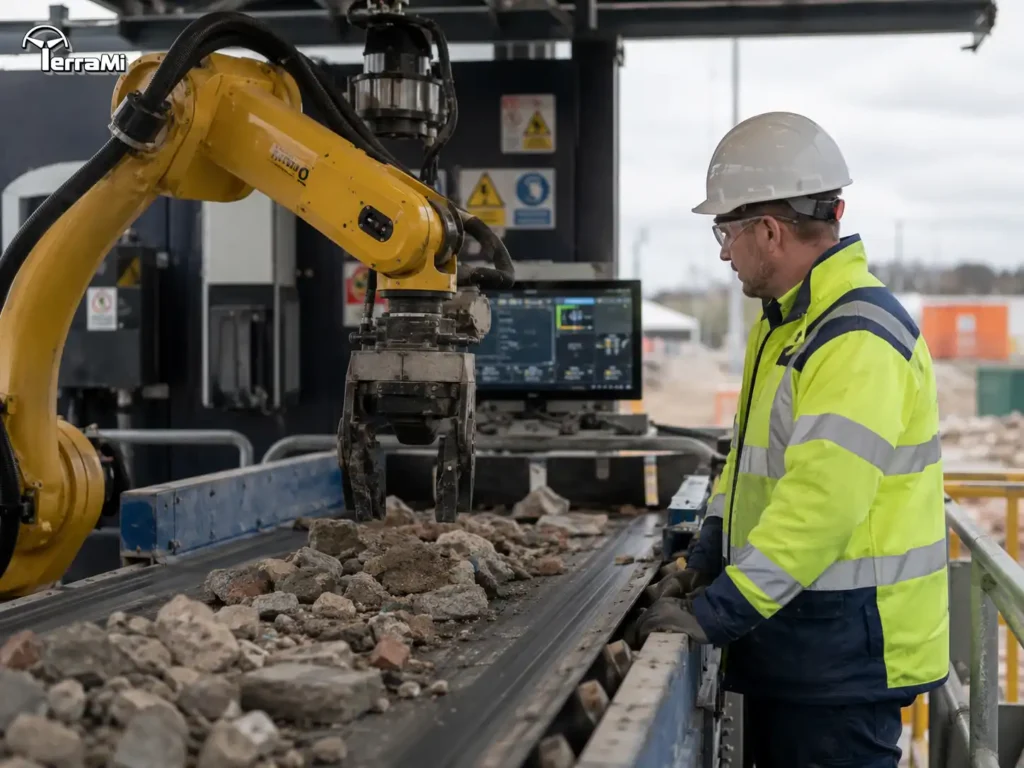
One of the most persistent Circular Economy Execution Challenges is the logistical nightmare of material recovery in high-density urban projects. Unlike a controlled factory environment, a construction site is a dynamic, often chaotic space. Sorting waste, certifying the structural integrity of reclaimed materials, and managing the reverse logistics of supply chains require a level of precision that current site management protocols are rarely equipped to handle. When we talk about Circular Economy Execution Challenges, we are primarily talking about the lack of standardized infrastructure for material “afterlives.”
Regulatory Hurdles and Structural Integrity
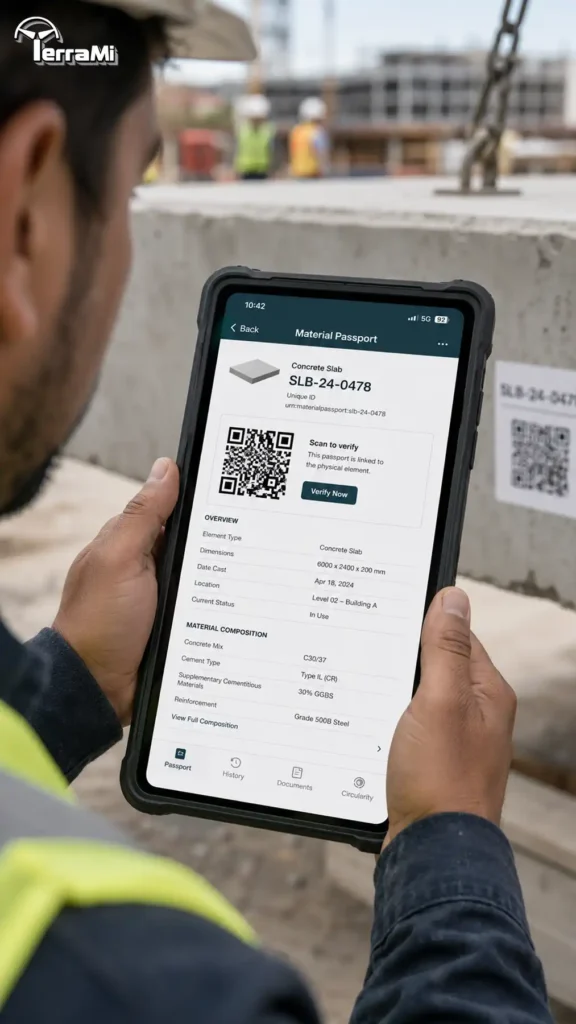
Another layer of Circular Economy Execution Challenges involves the rigid regulatory frameworks that govern large-scale infrastructure. In many jurisdictions, building codes are written with “virgin materials” in mind. Using recycled steel or crushed concrete often triggers a mountain of liability concerns for lead engineers. Without a global shift in how we certify the safety of circular materials, the execution stage will remain a graveyard for ambitious sustainability goals. At TerraMi, we advocate for a policy-first approach where digital passports for materials can mitigate these Circular Economy Execution Challenges by providing transparent data on material history and strength.
The Human Element: Training for a Circular Mindset
We cannot discuss Circular Economy Execution Challenges without addressing the skills gap. Site supervisors and workers are often incentivized by speed and “linear efficiency”—getting the job done fast and moving the waste out as quickly as possible. Circularity requires a slower, more methodical approach to deconstruction and material handling. Without a fundamental shift in workforce culture and vocational training, the Circular Economy Execution Challenges will continue to derail even the best-designed projects. This is not just a technological issue; it is a human management crisis.
Economic Misalignment in Short-Term Project Cycles
Perhaps the most daunting of the Circular Economy Execution Challenges is the financial structure of modern infrastructure. Most projects operate on tight, linear budgets where the cost of sorting and refurbishing materials on-site is seen as an “extra” expense rather than an investment. The long-term value of circularity—reduced carbon taxes and material longevity—often doesn’t reflect on the current project’s balance sheet. To overcome these Circular Economy Execution Challenges, we need new financing models that reward circular execution rather than just circular design.
Global Perspectives on Material Scarcity
“From a global standpoint, Circular Economy Execution Challenges vary by region but share a common thread: material scarcity. According to research by the Ellen MacArthur Foundation, the shift to a circular economy requires a fundamental redesign of industrial processes, especially at the site level where these scarcities are most acute. In rapidly developing economies, the pressure for rapid delivery often overrides the patience required for circularity. However, by ignoring these Circular Economy Execution Challenges, these regions risk locking themselves into high-carbon, high-waste futures. TerraMi’s research into international supply chains suggests that decentralized material banks are the only viable way to scale the circular economy at the execution level across different continents.”
Strategic Solutions for the Execution Gap
To effectively manage Circular Economy Execution Challenges, TerraMi recommends a three-pronged strategy:
- Digital Material Passports: Utilizing blockchain to track the lifecycle of every beam and brick.
- On-Site Circular Hubs: Dedicating physical space on construction sites for immediate material processing.
- Performance-Based Contracting: Shifting the focus from “lowest bid” to “highest circular value.”
Addressing Circular Economy Execution Challenges is not optional for the next generation of infrastructure. It is the defining factor between a project that is merely “green-washed” and one that is truly sustainable.
Partner with TerraMi for Circular Excellence
Navigating the Circular Economy Execution Challenges requires more than a checklist; it requires deep operational expertise and a commitment to transforming the industry. At TerraMi, we provide the consultancy and strategic oversight necessary to turn circular theory into site-level reality. We invite global stakeholders, developers, and engineering firms to collaborate with us in overcoming these execution barriers.
Contact the TerraMi team today to learn how we can help you implement circularity at the heart of your next infrastructure project.