
Why Infrastructure Must Move From Linear Systems to Circular Value
Introduction
For more than a century, infrastructure development has largely followed a linear logic. Materials are extracted, processed, transported, assembled into assets, operated for decades, and ultimately discarded when they reach the end of their useful life. This model helped build the roads, bridges, power systems, water networks, and cities that support modern economies. Yet the assumptions that made this approach successful are becoming increasingly difficult to sustain.
The world is entering an era defined by resource constraints, climate volatility, growing urbanization, and rising expectations for environmental performance. Infrastructure systems are now expected to deliver not only economic value but also resilience, resource efficiency, social benefits, and long-term sustainability. Under these conditions, the traditional linear model reveals a fundamental weakness: it treats materials, energy, and environmental capacity as if they were effectively unlimited.
As governments, investors, and infrastructure owners confront mounting pressures to reduce emissions and improve resource productivity, a different approach is emerging. Rather than viewing infrastructure as a one-way flow of resources from extraction to disposal, circular thinking seeks to keep materials, components, and value circulating within the system for as long as possible.
This transition represents far more than a sustainability initiative. It signals a fundamental shift in how infrastructure assets are conceived, designed, operated, maintained, and eventually transformed. In many respects, the movement from linear to circular infrastructure may become one of the defining engineering transitions of the twenty-first century.
The Hidden Linearity of Modern Infrastructure
Linear thinking is so deeply embedded in infrastructure systems that it often goes unnoticed.
A typical infrastructure project begins with the extraction of raw materials such as aggregates, metals, timber, or petroleum-based products. These materials are transformed into construction products, incorporated into physical assets, and maintained throughout their operational life. Eventually, significant portions of those assets are demolished, removed, and sent to landfills or low-value recovery streams.
At first glance, this process appears efficient. It has supported decades of economic growth and enabled unprecedented levels of development. However, the model depends on several assumptions that are increasingly being challenged.
First, it assumes that resource availability will remain stable and affordable. Yet many critical construction materials are becoming subject to supply chain disruptions, geopolitical risks, and price volatility.
Second, it assumes that environmental impacts can be treated as externalities. Modern climate policies, carbon pricing mechanisms, and ESG expectations increasingly challenge this assumption.
Third, it assumes that infrastructure value declines steadily until demolition becomes the most practical option. Circular approaches question whether assets and materials should be discarded at all.
The result is a growing recognition that infrastructure systems are not merely consumers of resources. They are also vast repositories of materials, components, and embedded value that can potentially be recovered, reused, adapted, and regenerated.
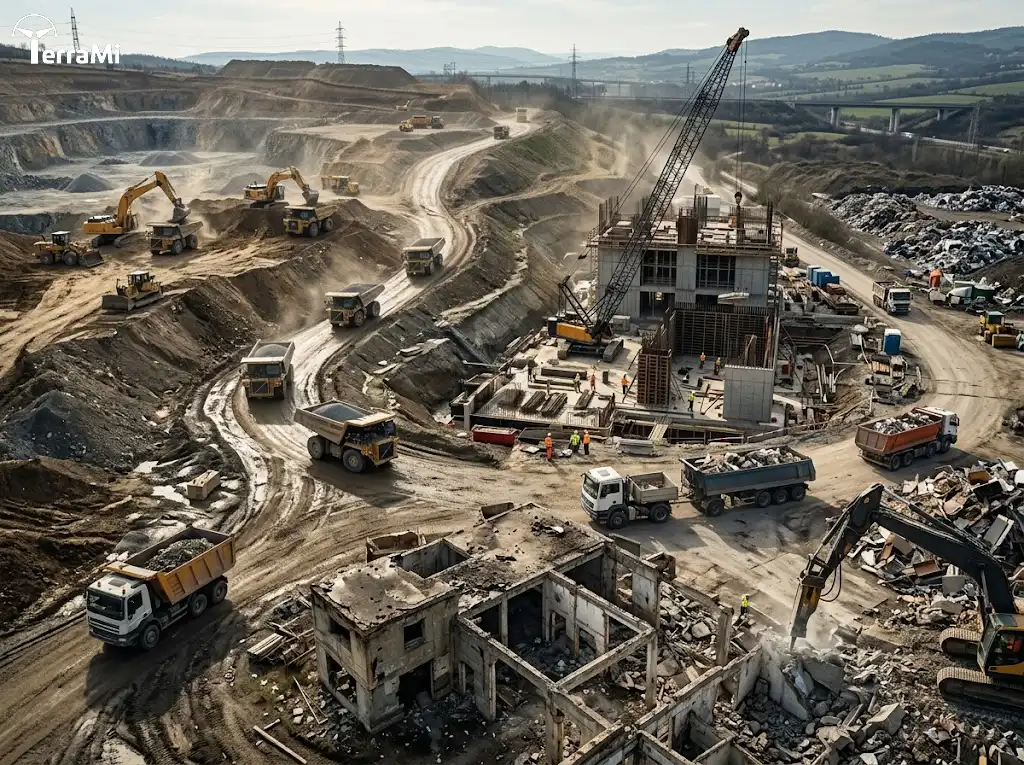
Why the Linear Model Is Reaching Its Limits
The limitations of linear infrastructure are becoming visible across multiple dimensions simultaneously.
Resource Pressure
Global demand for construction materials continues to increase as urban populations grow and infrastructure investment expands. Roads, buildings, energy systems, and transportation networks require enormous quantities of concrete, steel, aggregates, and other materials.
The challenge is not simply availability. The environmental consequences of extraction are becoming increasingly difficult to ignore. Habitat disruption, ecosystem degradation, water consumption, and carbon emissions are closely linked to material production.
A linear system effectively treats future resource availability as a certainty. Circular systems recognize that resource stewardship is becoming a strategic necessity.
Economic Volatility
Infrastructure organizations increasingly face unpredictable material costs and supply chain disruptions.
Recent global events have demonstrated how quickly shortages can affect project schedules, budgets, and operational performance. Dependence on continuous extraction and global supply chains introduces vulnerabilities that many infrastructure owners are only beginning to understand.
Circular strategies can reduce exposure to these risks by increasing the use of recovered materials, extending asset life, and reducing dependency on virgin resource inputs.
Climate Commitments
Infrastructure is both a contributor to and a victim of climate change.
Large portions of global greenhouse gas emissions are linked to construction activities, material production, and infrastructure operations. At the same time, infrastructure assets must withstand increasingly severe climate impacts.
This dual challenge creates pressure to rethink traditional approaches. Circular infrastructure provides a pathway for reducing embodied carbon while improving long-term resource efficiency, directly aligning with global frameworks established by leading institutions like theEllen MacArthur Foundation.
Circular Thinking Begins with a Different Question
One of the most important differences between linear and circular infrastructure lies in the questions engineers ask.
In a linear system, the dominant question is often:
“What resources do we need to build this asset?”
In a circular system, the question becomes:
“How can we deliver the required function while preserving the value of materials, components, and resources for as long as possible?”
This shift may appear subtle, but its implications are profound.
Instead of focusing solely on asset creation, engineers begin considering:
- Future adaptability
- Material recoverability
- Reuse potential
- Lifecycle performance
- Resource productivity
- Long-term environmental impacts
The objective expands from building infrastructure to managing value across multiple generations of infrastructure use.
Infrastructure as a Material Bank
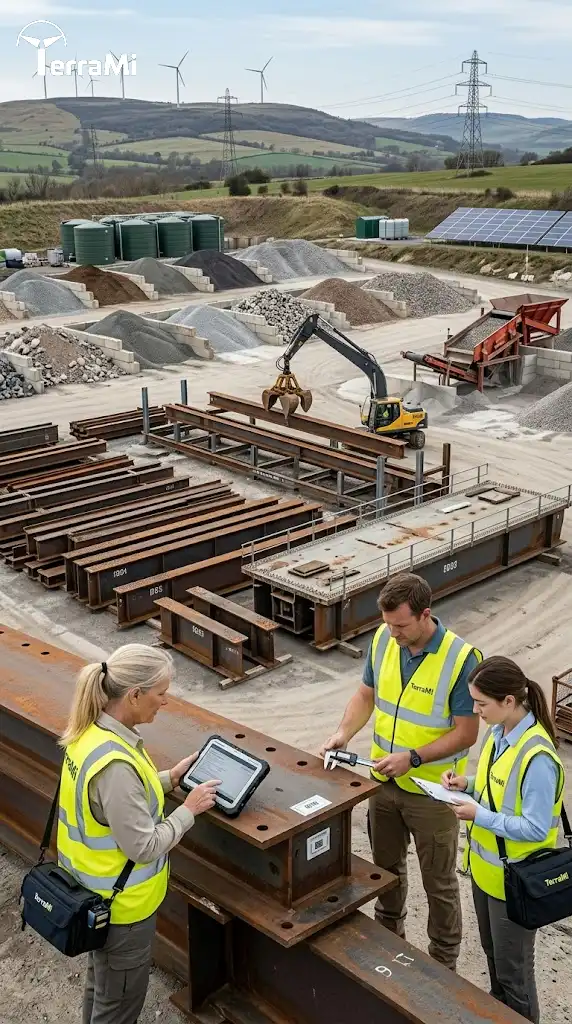
Perhaps the most transformative concept within circular infrastructure is the idea that infrastructure assets should be viewed as material banks rather than material sinks.
Traditional systems consume resources and eventually dispose of them.
Circular systems recognize that every bridge, transit system, utility network, or building contains significant stocks of valuable materials that may retain utility long after the original asset configuration becomes obsolete.
This perspective fundamentally changes planning horizons.
Rather than asking how an asset will be demolished, infrastructure owners begin asking:
- Which components can be reused?
- Which materials can be recovered?
- How can future disassembly be simplified?
- What value remains embedded within the asset?
These questions introduce new opportunities for both sustainability and economic efficiency.
The First Step Is Not Technology—It Is Mindset
A common misconception is that circular infrastructure begins with advanced technologies.
In reality, the transition begins with a change in mindset.
Organizations often search for new tools, digital platforms, or innovative materials before addressing the underlying assumptions guiding their decisions. Yet circularity is fundamentally a systems-thinking challenge.
The most successful transitions occur when infrastructure stakeholders begin viewing projects as part of larger resource ecosystems rather than isolated assets.
This perspective encourages collaboration across planners, engineers, contractors, operators, regulators, and investors. It shifts attention from short-term project delivery toward long-term value creation.
Technology can accelerate circular outcomes, but technology alone cannot create them.
The first step is recognizing that infrastructure transformation requires a different way of thinking about resources, value, and time.
The Core Principles of Circular Infrastructure
While circular economy concepts originated largely in manufacturing and consumer industries, infrastructure presents a unique opportunity because of its scale, longevity, and resource intensity.
Circular infrastructure is built around several interconnected principles.
Designing Out Waste
Traditional infrastructure often treats waste as an unavoidable byproduct of construction, maintenance, and demolition.
Circular infrastructure challenges this assumption.
Instead of managing waste after it is generated, circular approaches seek to eliminate waste at the design stage.
This means selecting materials that can be recovered, reused, refurbished, or recycled without significant loss of value. It also means minimizing unnecessary material consumption throughout the asset lifecycle.
The goal is not simply waste reduction. The goal is waste prevention.
For infrastructure owners, this shift can significantly reduce future disposal costs while improving long-term resource efficiency.
Extending Asset Life
The most sustainable infrastructure asset is often the one that does not need to be replaced.
Linear models tend to focus on construction and eventual replacement. Circular models place greater emphasis on extending service life through maintenance, refurbishment, adaptation, and modernization.
This principle aligns naturally with resilience objectives.
An infrastructure system that can evolve over time is generally more capable of responding to technological change, climate pressures, and shifting user demands.
Examples include:
- Bridge rehabilitation instead of replacement
- Building retrofits instead of demolition
- Utility modernization instead of full reconstruction
- Adaptive reuse of existing infrastructure corridors
Extending asset life reduces demand for new materials while preserving embedded carbon and financial investments already contained within infrastructure systems.
Keeping Materials in Use
Materials represent stored value.
In a linear system, much of that value is destroyed when assets are demolished.
Circular infrastructure seeks to preserve that value.
Materials should ideally move through multiple life cycles while maintaining the highest possible utility.
This concept is often referred to as value retention.
For example:
- Structural steel can be recovered and reused.
- Concrete can be processed into secondary aggregate.
- Building components can be remanufactured.
- Utility equipment can be refurbished.
The objective is to maximize material productivity across multiple generations of infrastructure use.
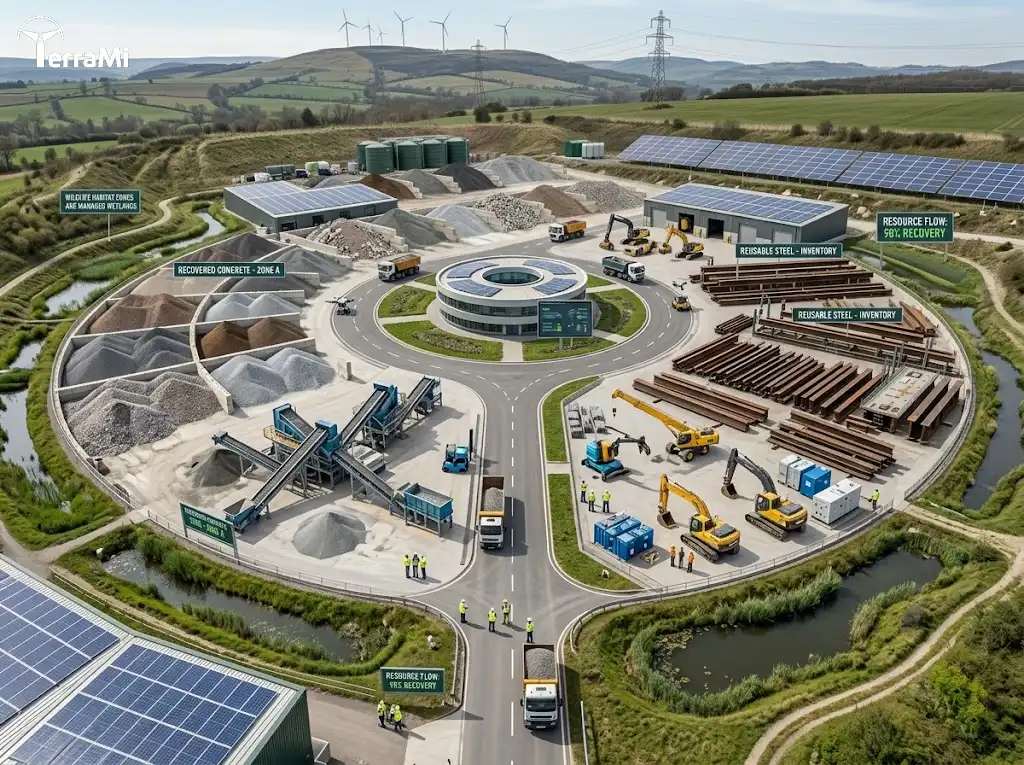
Regenerating Natural Systems
Perhaps the most significant difference between sustainability and circularity lies in the concept of regeneration.
Traditional sustainability often focuses on reducing negative impacts.
Circularity increasingly seeks to create positive impacts.
Infrastructure can contribute to ecosystem restoration through:
- Nature-based solutions
- Green corridors
- Wetland restoration
- Stormwater management systems
- Biodiversity integration
In this context, infrastructure becomes more than a physical asset.
It becomes part of a larger environmental system.
From Project Thinking to Lifecycle Thinking
One reason circularity remains challenging is that infrastructure organizations often operate within project-based frameworks.
Projects have defined budgets, schedules, and delivery milestones.
Circularity operates on a different timeline.
The benefits of circular infrastructure frequently emerge over decades rather than months.
This creates a tension between short-term project objectives and long-term system value.
A lifecycle perspective requires decision-makers to evaluate:
- Design impacts
- Construction impacts
- Operational performance
- Maintenance requirements
- Adaptation potential
- End-of-life recovery opportunities
When viewed through a lifecycle lens, decisions that initially appear more expensive may generate significantly greater value over the full lifespan of the asset.
This shift mirrors a broader evolution occurring across infrastructure governance, where resilience, sustainability, and lifecycle performance increasingly influence investment decisions.
Circular Infrastructure and ESG Performance
The growing adoption of Environmental, Social, and Governance (ESG) frameworks is accelerating interest in circular infrastructure.
Many organizations initially approached ESG as a reporting requirement.
However, mature ESG strategies increasingly recognize that circularity can improve performance across all three dimensions.
Environmental Value
Circular infrastructure contributes to:
- Reduced material extraction
- Lower waste generation
- Reduced embodied carbon
- Improved resource efficiency
- Enhanced ecosystem protection
These outcomes directly support environmental objectives while helping organizations meet regulatory, investor expectations, and the UN Sustainable Development Goals.
Social Value
Infrastructure exists to serve people.
Circular approaches can strengthen social outcomes by:
- Creating local recovery and refurbishment industries
- Supporting workforce development
- Improving community resilience
- Enhancing environmental quality
- Preserving infrastructure functionality over longer periods
Communities benefit when infrastructure systems remain adaptable and capable of meeting future needs.
Governance Value
Governance is often overlooked in discussions about circularity.
Yet governance determines whether circular principles move beyond pilot projects.
Successful implementation requires:
- Long-term planning
- Cross-sector collaboration
- Transparent performance metrics
- Lifecycle accountability
- Integrated decision-making
As discussed in TerraMi’s previous article on infrastructure governance, resilient systems depend on institutions capable of managing uncertainty over extended time horizons.
Circularity reinforces this principle by encouraging decision-makers to think beyond immediate project delivery.
The Economic Case for Circular Infrastructure
A common misconception is that circular infrastructure is primarily an environmental initiative.
In reality, economic considerations are becoming one of its strongest drivers.
Infrastructure owners face increasing pressure to:
- Reduce lifecycle costs
- Improve asset performance
- Manage resource risks
- Increase operational efficiency
Circular strategies can support all of these objectives.
Potential benefits include:
Reduced Material Costs
Recovered and reused materials can reduce dependence on volatile commodity markets.
Increased Asset Productivity
Assets that remain useful longer generate greater returns on investment.
Lower Waste Management Costs
Reduced disposal requirements create direct financial savings.
Improved Risk Management
Greater resource independence can strengthen supply chain resilience.
Enhanced Investor Confidence
Organizations demonstrating long-term resource stewardship may become more attractive to investors increasingly focused on ESG performance.
Circularity therefore represents both an environmental strategy and a business strategy.
Resource Security Perspective
Throughout history, competition for scarce resources has influenced trade routes, colonial expansion, geopolitical rivalries, and, in some cases, military conflict. By reducing dependence on continuous extraction and imported raw materials, circular infrastructure can strengthen national resilience and improve resource security. Circularity is therefore not only an environmental or economic strategy—it is increasingly becoming a strategic component of long-term national stability.
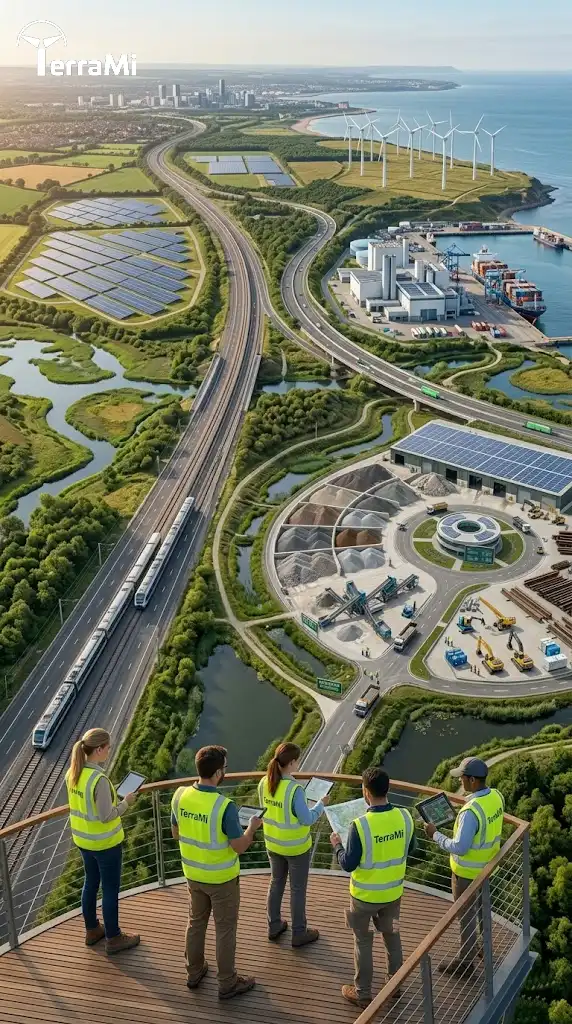
Emerging Global Examples
Across the world, infrastructure organizations are beginning to integrate circular principles into planning and delivery processes.
Examples include:
- Designing buildings for future disassembly.
- Reusing structural components in transportation projects.
- Incorporating recycled materials into road construction.
- Implementing urban mining programs to recover valuable materials from existing infrastructure stocks.
- Integrating nature-based infrastructure solutions into climate adaptation strategies.
Although implementation remains uneven, the direction of travel is increasingly clear.
Circularity is gradually moving from an experimental concept toward a mainstream infrastructure strategy.
The question is no longer whether circular principles are relevant.
The question is how quickly organizations can adapt to them.
Why Circular Infrastructure Adoption Remains Slow
Despite growing momentum, the transition from linear to circular infrastructure remains challenging.
The barriers are rarely technical.
Most are institutional.
Legacy Procurement Models
Many procurement systems prioritize lowest initial cost rather than lifecycle value.
As a result, decisions often favor short-term savings over long-term performance.
Circular approaches frequently struggle within procurement frameworks designed for linear outcomes.
Fragmented Stakeholders
Infrastructure projects involve numerous participants:
- Owners
- Designers
- Contractors
- Operators
- Regulators
- Investors
Each stakeholder may optimize for different objectives.
Circularity requires coordination across the entire value chain.
Without collaboration, opportunities for material recovery, reuse, and lifecycle optimization are often lost.
Inadequate Data
Organizations cannot manage what they cannot measure.
Many infrastructure owners lack reliable information regarding:
- Material inventories
- Asset condition
- Recovery potential
- Lifecycle impacts
Digital tools, asset management systems, and emergingdigital twin technologiesmay help address these challenges in the coming years.
Cultural Resistance
Perhaps the greatest obstacle is cultural.
Infrastructure industries have been optimized around linear models for generations.
Changing standards, assumptions, and decision-making frameworks requires time.
The transition is not merely technological.
It is organizational.
It requires leaders willing to challenge established practices and adopt longer-term perspectives.
The Future of Infrastructure Is Increasingly Circular
Several powerful trends suggest that circularity will become increasingly important.
These include:
- Climate adaptation requirements
- Net-zero commitments
- Resource scarcity concerns
- ESG expectations
- Urbanization pressures
- Supply chain uncertainties
Together, these forces are reshaping how infrastructure value is defined.
Historically, value was measured primarily through construction outputs.
Increasingly, value is being measured through long-term outcomes.
Questions such as:
- How resilient is the asset?
- How efficiently does it use resources?
- How adaptable is it?
- How much value can it retain over time?
are becoming central to infrastructure decision-making.
Circularity provides a framework for answering these questions.
TerraMi Perspective
Infrastructure transformation is often discussed in terms of emerging technologies, advanced materials, or digital innovation. While these developments are important, they risk obscuring a more fundamental reality.
The transition from linear to circular infrastructure begins with a change in perspective.
Infrastructure should no longer be viewed as a temporary arrangement of resources destined for eventual disposal. Instead, it should be understood as a long-term system of stored value capable of adaptation, recovery, regeneration, and continuous use.
Organizations that embrace this perspective early may gain advantages that extend beyond sustainability performance. They may improve resilience, reduce resource exposure, strengthen governance practices, and create more durable economic value.
Circularity is therefore not simply a waste-management strategy.
It is an infrastructure strategy.
And increasingly, it may become a prerequisite for building systems capable of thriving in an uncertain future.
FAQ
What is circular infrastructure?
Circular infrastructure is an approach that keeps materials, components, and resources in productive use for as long as possible while minimizing waste and environmental impacts.
How is circular infrastructure different from sustainable infrastructure?
Sustainable infrastructure focuses on reducing negative impacts. Circular infrastructure extends this objective by preserving value, extending asset life, recovering materials, and supporting regenerative outcomes.
Why is circularity important for infrastructure?
Infrastructure consumes large quantities of resources and generates significant environmental impacts. Circular approaches improve resource efficiency, resilience, and long-term economic performance.
Does circular infrastructure reduce costs?
Although implementation may require upfront investment, circular strategies can reduce lifecycle costs through longer asset life, lower material consumption, reduced waste, and improved resource productivity.
What role does ESG play in circular infrastructure?
Circularity supports ESG objectives by improving environmental performance, strengthening social outcomes, and encouraging long-term governance practices focused on lifecycle value.