
The Psychology of Performance Metrics: Beyond KPIs in Modern Infrastructure
Main Focus Keyword: Infrastructure Performance Psychology
In the traditional management of mega-projects, success is often reduced to a set of cold, hard numbers. However, as the industry evolves toward ESG 2.0, a new field is emerging as a critical success factor: Infrastructure Performance Psychology. It is no longer enough to track Key Performance Indicators (KPIs) in isolation; we must understand how these metrics influence the behavior, motivation, and decision-making of the humans responsible for delivering them. At TerraMi, we recognize that a metric is not just a measurement—it is a psychological trigger. If misinterpreted or poorly implemented, even the most logical KPIs can lead to “gaming the system” or catastrophic operational blind spots. Understanding Infrastructure Performance Psychology is the key to transforming static data into a high-performance culture.
The Behavioral Impact of Quantitative Targets
The foundation of Infrastructure Performance Psychology lies in how individuals respond to being watched. When workers and managers are judged solely on quantitative output—such as cubic meters of concrete poured or meters of tunnel bored—the quality of decision-making often suffers. This dynamic closely reflects “Goodhart’s Law,” where performance metrics can unintentionally distort behavior when they become the primary target of evaluation. In large-scale engineering environments, this often manifests as shortcuts in “invisible” safety practices taken to satisfy “visible” productivity goals. As emphasized by Arup’s work on circular and resilient infrastructure systems, sustainable infrastructure performance depends on balancing efficiency with long-term resilience, operational integrity, and human-centered decision-making. By applying the principles of Infrastructure Performance Psychology, TerraMi helps project leaders design balanced scorecards that reward qualitative safety, resilience, and long-term project value alongside traditional speed and cost metrics.
Incentives, Pressure, and the “Social Loafing” Effect
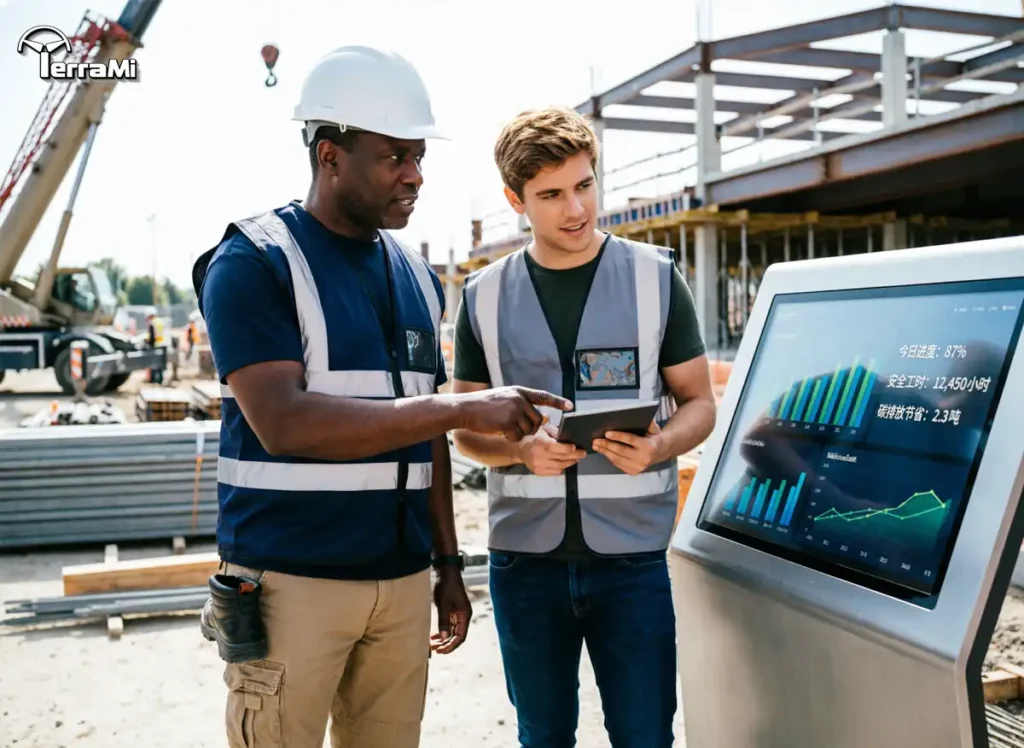
Within the framework of Infrastructure Performance Psychology, we must also address the dynamics of large, diverse teams. On mega-projects, “social loafing”—the tendency for individuals to put in less effort when they are part of a massive group—is a common risk. Conversely, excessive individual pressure can lead to burnout and high-stakes errors. Effective performance management requires a deep dive into the Infrastructure Performance Psychology of team accountability. We advocate for “Micro-Ownership” models, where digital twins provide transparent, real-time feedback not just to headquarters, but to the site teams themselves. This transparency, when managed with psychological intelligence, fosters a sense of agency and pride, which are far more effective drivers of performance than punitive monitoring.

ESG Metrics and the “Compliance vs. Commitment” Paradox
A major challenge in current infrastructure projects is the psychological transition toward ESG goals. Many teams view ESG metrics as a “check-the-box” exercise—a burden imposed from the outside. Through the lens of Infrastructure Performance Psychology, the goal of a site manager should be to move the workforce from mere compliance to genuine commitment. When carbon reduction or social equity metrics are framed as core engineering challenges rather than bureaucratic hurdles, the psychological response changes from resistance to innovation. At TerraMi, our global expertise allows us to bridge this gap, ensuring that Infrastructure Performance Psychology is integrated into the very identity of the project, making sustainability a point of professional pride for the engineering team.
Case Study: Metric Misalignment in a Global Context
For instance, in our recent assessment of a mega-project in Southeast Asia, we identified a critical failure in the project’s Infrastructure Performance Psychology. The management had implemented a “Zero-Accident” bonus. While this sounded positive, it psychologically incentivized supervisors to hide minor incidents to protect their bonuses. This created a culture of silence that eventually led to a major, avoidable operational failure. By the time TerraMi intervened, the trust between the workforce and the executive suite had vanished. We replaced the “outcome-based” metric with “proactive reporting” metrics—rewarding teams for identifying risks before they became accidents. This shift in Infrastructure Performance Psychology not only improved safety but also boosted morale and overall project efficiency.
Digital Twins and the Psychology of Feedback
The introduction of AI and digital twins has added a new layer to Infrastructure Performance Psychology. Real-time data can be a source of stress or a source of empowerment. If the data is used for “micro-management,” it triggers a defensive psychological response. However, if the digital twin is used as a “coaching tool,” it enhances the team’s problem-solving capabilities. Mastering the Infrastructure Performance Psychology of digital feedback means ensuring that data is accessible, understandable, and—most importantly—used to support the human expert on the ground.
Strategic Roadmap: Optimizing the Human-Metric Interface
To master Infrastructure Performance Psychology, TerraMi recommends the following strategic steps:
- Metric Sensitivity Audits: Analyzing how current KPIs are influencing on-site behavior and identifying potential “gaming” risks.
- Psychological Safety Frameworks: Encouraging a culture where reporting a failure is valued more than hiding a flaw.
- Balanced Incentive Structures: Linking financial and professional rewards to a mix of quantitative speed and qualitative ESG benchmarks.
Conclusion: Engineering the Mind for Better Infrastructure
As we move deeper into the age of AI and hyper-connectivity, the most successful infrastructure projects will be those that understand the human mind as deeply as they understand the physical structure. Infrastructure Performance Psychology is the final frontier of project optimization. By aligning our metrics with human nature, we don’t just build faster; we build better, safer, and more sustainably.
TerraMi Insights is dedicated to exploring these deep intersections of human behavior and engineering excellence. Contact us to learn how we can optimize your project’s performance culture through the science of Infrastructure Performance Psychology.