
Governance in High-Risk Projects: Unveiling the Critical Gap in Accountability
Introduction: Why Governance in High-Risk Projects Determines Project Survival
In the modern infrastructure sector, governance is frequently reduced to a framework of compliance checklists, executive reporting structures, and contractual oversight. Yet in reality, governance in high-risk projects is far more consequential. In large-scale infrastructure environments—where projects operate under compressed schedules, political scrutiny, environmental obligations, and technical uncertainty—governance becomes the operational architecture that determines whether a project remains resilient under pressure or gradually moves toward systemic failure.
Across transportation corridors, energy infrastructure, water systems, and complex urban developments, many project failures do not originate from engineering incapability alone. They emerge from fragmented accountability, delayed escalation pathways, disconnected decision-making, and organizational blind spots between leadership teams and field execution. When governance structures fail to connect strategic intent with operational reality, even technically sophisticated projects become vulnerable to disruption.
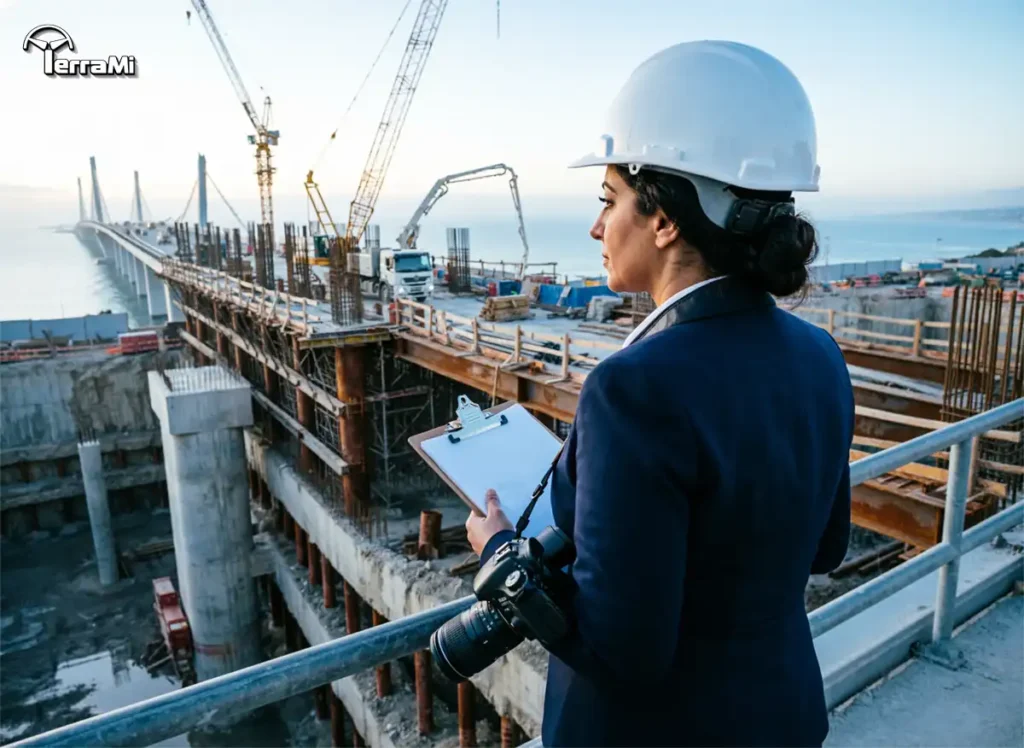
At TerraMi, governance is viewed not as a static administrative layer, but as a living system of accountability that must continuously align executive decisions with site-level conditions. In high-risk infrastructure environments, resilient delivery depends on how effectively organizations manage the decision-execution gap before isolated problems evolve into structural crises.
Governance in High-Risk Projects and the Decision-Execution Gap
One of the most underestimated threats in governance in high-risk projects is the widening disconnect between strategic leadership and field execution. Executive teams often define sustainability targets, safety priorities, ESG objectives, and operational standards within boardrooms and digital dashboards. However, those priorities frequently encounter a very different reality once they reach construction sites operating under schedule compression, workforce shortages, procurement constraints, and chronic operational pressure. According to research published by McKinsey & Company, execution gaps between executive planning and operational delivery remain one of the primary causes of cost overruns, delays, and performance failures in large-scale infrastructure and capital projects.
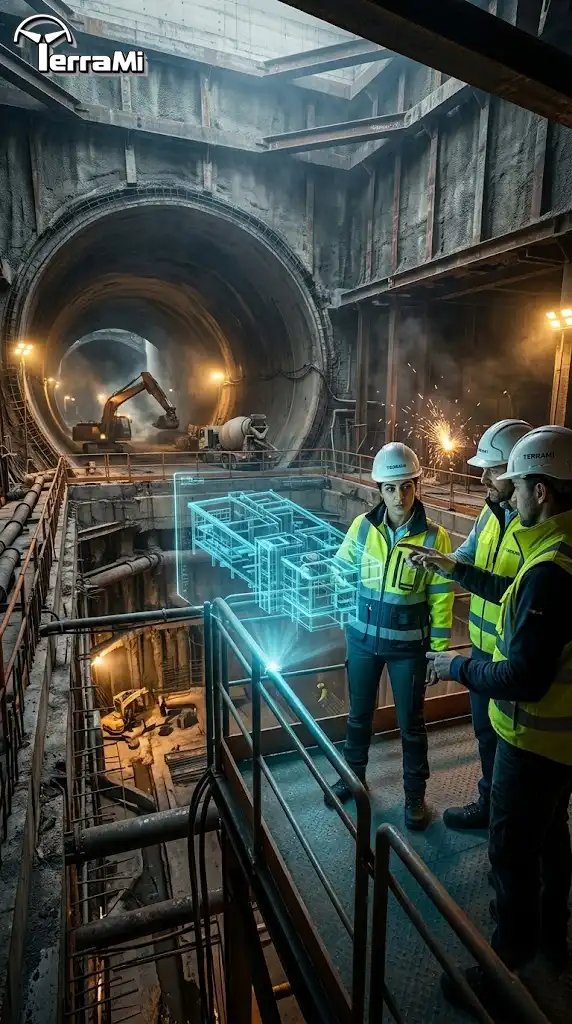
This disconnect creates what can be described as the decision-execution gap.
The decision-execution gap occurs when governance structures assume that strategic directives automatically translate into operational behavior. In practice, infrastructure projects operate through multiple contractor layers, fragmented reporting systems, subcontractor dependencies, and geographically distributed teams. Information becomes diluted as it moves through organizational hierarchies, while emerging risks are often softened, delayed, or underreported before reaching decision-makers.
In many high-risk infrastructure environments, site teams are forced to make rapid operational decisions long before executive oversight mechanisms can react. Under these conditions, governance frameworks that rely exclusively on top-down reporting become dangerously reactive.
For example, in fast-tracked transportation megaprojects, schedule pressure frequently overrides escalation protocols. Teams may continue progressing visible construction milestones despite unresolved safety concerns or growing workforce fatigue because governance systems reward delivery speed more visibly than operational transparency.
This is where governance in high-risk projects must evolve beyond conventional compliance structures. Accountability cannot remain concentrated exclusively at the executive level. Instead, risk ownership and operational visibility must be distributed throughout the entire project ecosystem while preserving clear hierarchical responsibility.
Effective governance systems ensure that:
- Site engineers understand escalation authority.
- Project managers possess real-time visibility into operational friction.
- Contractors are aligned with transparent reporting expectations.
- Leadership teams receive accurate field intelligence rather than filtered optimism.
Without this alignment, organizations unintentionally create governance blind spots that only become visible after delays, incidents, claims, or reputational damage have already materialized.
Governance in High-Risk Projects Requires More Than Digital Oversight
The global infrastructure sector is currently undergoing rapid digital transformation. AI-powered monitoring systems, predictive analytics, digital twins, and ESG dashboards are increasingly positioned as solutions for governance challenges. However, governance in high-risk projects cannot be solved through technology alone.
One of the most dangerous assumptions in modern infrastructure management is the belief that more data automatically produces better governance.
In reality, clean dashboards do not necessarily represent healthy execution environments.
Digital systems can measure productivity, track material flows, and visualize schedules, but they often fail to capture the human dynamics that influence operational resilience. Fear of blame, reporting hesitation, communication breakdowns, and workforce disengagement frequently remain invisible within highly structured reporting systems.
This creates a paradox in governance in high-risk projects:
organizations may achieve high levels of digital visibility while simultaneously losing operational truth.
Resistance to governance transformation is therefore not simply a technical issue; it is deeply cultural.
In established engineering environments, additional oversight mechanisms are often perceived as bureaucratic expansion rather than operational support. Site teams may interpret intensified reporting requirements as instruments of fault attribution rather than collaborative risk management. Over time, this perception creates governance fatigue.
Governance fatigue emerges when excessive audits, KPI overload, repetitive compliance reporting, and fragmented approval chains begin to erode operational engagement. Instead of improving transparency, organizations unintentionally encourage defensive reporting behavior, delayed escalation, and silent risk accumulation.
This challenge is increasingly recognized across the infrastructure sector. Organizations such as McKinsey & Company and World Economic Forum have repeatedly highlighted that infrastructure resilience depends not only on technology investment, but also on organizational adaptability, workforce trust, and governance integration.
The implication is clear:
governance in high-risk projects must balance digital oversight with human-centered operational design.
True governance maturity is achieved when field teams perceive transparency as protection rather than surveillance.
ESG Commitments Depend on Governance Integrity
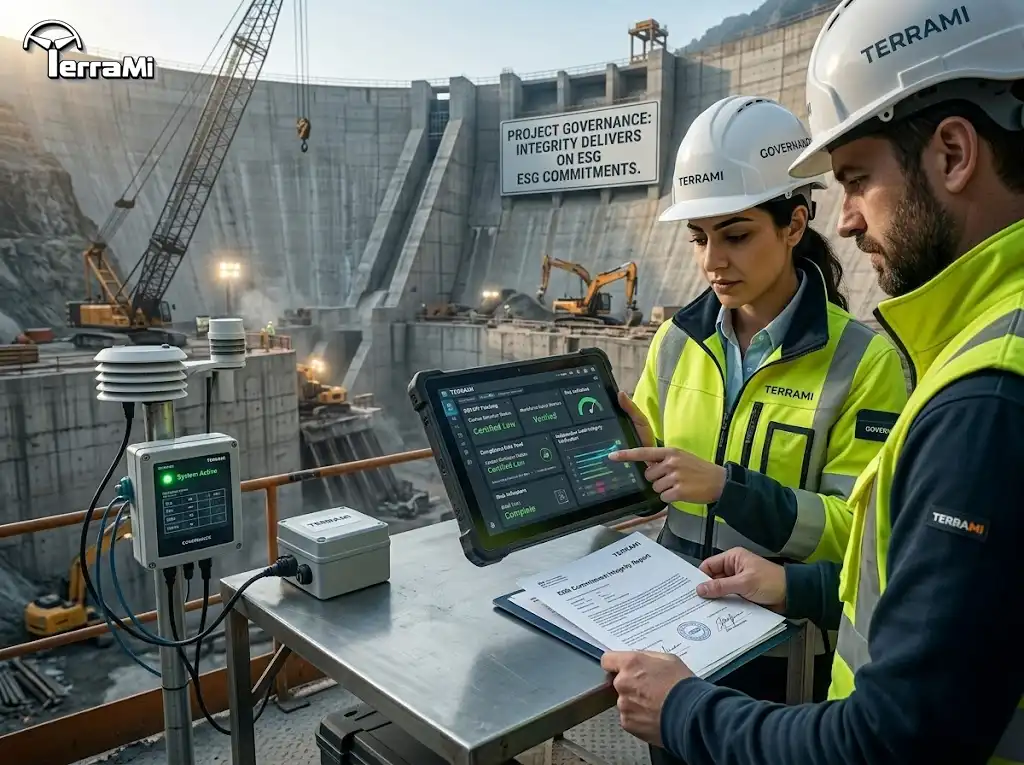
Within ESG 2.0 frameworks, governance is no longer a supporting pillar—it is the mechanism that determines whether environmental and social commitments are operationally credible.
Many infrastructure organizations publicly promote sustainability objectives, carbon reduction targets, workforce commitments, and ethical procurement standards. Yet without robust governance structures, these commitments often remain disconnected from execution realities.
The “G” in ESG is what transforms sustainability from narrative into operational discipline.
Without governance integrity:
- Environmental targets become reporting exercises rather than measurable outcomes.
- Social commitments lose credibility under workforce instability.
- Safety initiatives become reactive rather than preventive.
- ESG disclosures drift away from field conditions.
In high-risk projects, sustainability performance is ultimately determined at the execution layer—not within corporate presentations.
For example, material traceability systems may formally support circular economy objectives, but if procurement pressure forces rapid substitutions without transparent approval pathways, governance failures undermine ESG credibility immediately.
Similarly, workforce wellbeing policies may exist at the executive level, yet chronic schedule acceleration, contractor fragmentation, and staffing volatility can gradually erode psychological safety on-site.
This is why governance in high-risk projects must function as a real-time accountability bridge between ESG strategy and operational delivery.
At TerraMi, this perspective aligns closely with broader discussions explored in Digital Twin Infrastructure: Extending Intelligence Across the Asset Lifecycle and Project Resilience Starts at the Construction Site, where infrastructure resilience is examined through the interaction between technology, human decision-making, and execution realities.
Transparent governance structures supported by integrated infrastructure data create a “single source of operational truth.” This reduces the distance between strategic assumptions and site conditions, enabling organizations to identify governance friction before it escalates into systemic risk.
From Reactive Oversight to Distributed Accountability
Traditional governance systems are largely reactive. They rely on lagging indicators such as:
- Incident reports
- Cost overruns
- Claims
- Delays
- Non-conformance logs
- Regulatory findings
However, resilient governance in high-risk projects increasingly depends on leading indicators capable of identifying instability before disruption becomes visible.
These leading governance signals include:
- Workforce turnover spikes
- Escalation hesitation
- Communication bottlenecks
- Site decision latency
- Procurement irregularities
- Contractor coordination breakdowns
- Abnormal material variance patterns
Organizations that monitor these signals proactively gain significantly greater resilience capacity.
This requires a transition from isolated oversight models toward distributed accountability frameworks.
Distributed accountability does not eliminate hierarchy. Rather, it ensures that operational visibility, risk awareness, and escalation responsibility are embedded throughout the project structure.
Key principles include:
Defined Risk Ownership
Every critical risk variable must have clearly identified operational ownership across both management and execution layers.
Real-Time Feedback Loops
Direct communication pathways between field teams and strategic leadership reduce reporting distortion and accelerate corrective action.
Digital-Operational Alignment
AI systems, infrastructure analytics, and monitoring platforms should support—not replace—human situational judgment.
Psychological Safety
Organizations must incentivize transparency over silence. Bad news delivered early is operationally manageable; concealed risk is exponentially more dangerous.
Governance Simplicity
Effective governance frameworks reduce unnecessary reporting friction rather than increasing bureaucratic complexity.
The strongest governance systems are not those with the most controls. They are the systems that surface operational truth fastest.
Conclusion: Governance as the Foundation of Resilient Infrastructure Delivery
As infrastructure systems become more interconnected, politically exposed, and operationally complex, governance in high-risk projects will increasingly determine long-term project resilience. Technical excellence alone is no longer sufficient. Organizations must also manage human resistance, fragmented accountability, digital blind spots, and execution pressure with equal precision.
The future of infrastructure delivery belongs to organizations capable of aligning sustainability, operational transparency, and decision-making integrity across every layer of project execution.
At TerraMi, we believe resilient infrastructure begins with accountable leadership, transparent governance systems, and data-driven operational insight. Our approach combines ESG intelligence, infrastructure analytics, and execution-focused governance strategies to help organizations reduce systemic risk while strengthening long-term project performance.
If your organization is navigating complex infrastructure delivery challenges, exploring ESG integration, or seeking stronger governance frameworks for high-risk projects, we invite you to connect with the TerraMi team for strategic collaboration and specialized consulting support.