
Why Digital Twin Adoption Stalls at Scale
Digital twin adoption often looks more successful at the pilot stage than it does at the organizational level.
A focused pilot can be built around one asset, one department, one data environment and a clearly defined use case. The team can establish the necessary data connections, build the model, integrate selected sensors and demonstrate a measurable operational benefit.
Scaling changes the problem.
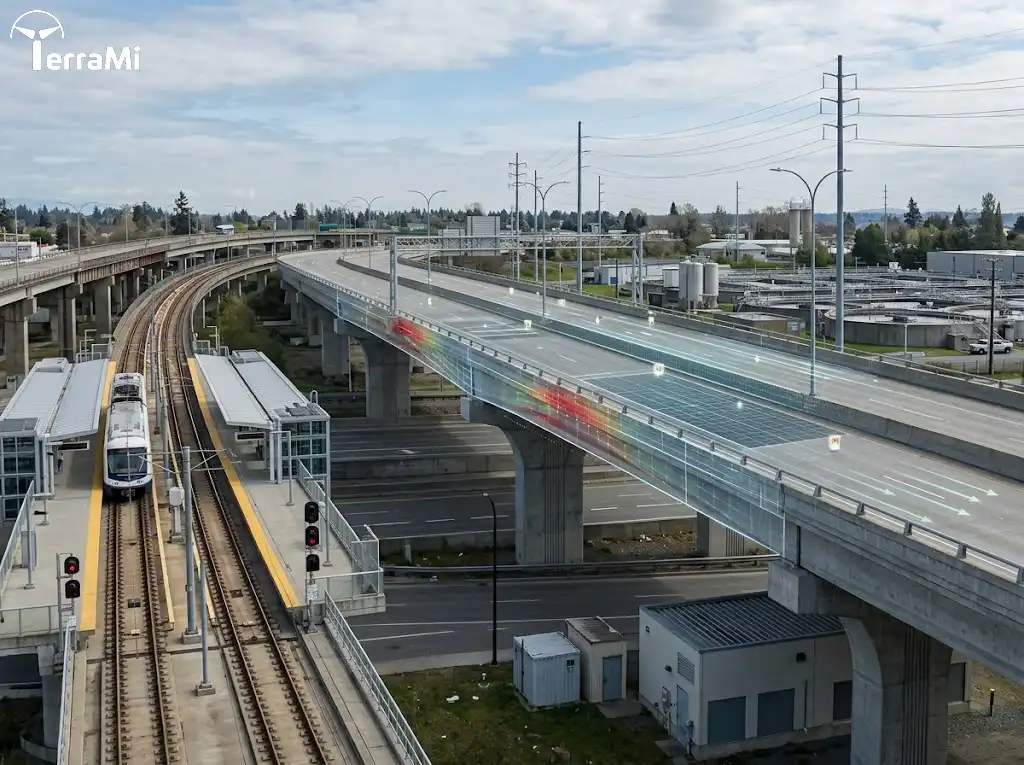
The second deployment rarely has exactly the same data structure. The next asset may use different equipment, another department may operate a different information system, and another stakeholder may have different requirements for access, security or ownership. What worked because a small project team could manually coordinate the pieces begins to encounter organizational and technical boundaries.
This is the pilot trap: proving that a Digital Twin can work is not the same as proving that an organization can deploy and sustain Digital Twins repeatedly.
Recent research reinforces this distinction. A 2026 study on Digital Twin adoption in small and midsize cities argues that fragmented data environments, weak interoperability and limited institutional capacity remain binding constraints, and proposes a readiness-first approach in which governance and data foundations precede more advanced deployment.
The implication is important for infrastructure owners.
The question should not be:
“Can we build a Digital Twin?”
It should be:
“Can we build the next ten without rebuilding the first one from scratch?”
That is a very different test of maturity.

What Changes When Digital Twins Move Beyond the Pilot?
A pilot usually benefits from conditions that are difficult to reproduce at scale.
The project may have a dedicated budget. A small group of specialists may know exactly where the relevant data resides. Engineers and technology teams may work closely together. Data gaps can sometimes be corrected manually. A vendor may provide intensive support during implementation.
None of these conditions necessarily survives expansion.
At scale, Digital Twin adoption becomes an organizational systems problem.
The organization needs repeatable methods for acquiring and governing data, common identifiers for assets, interoperable systems, clear ownership, security controls, appropriate standards and people capable of maintaining the environment over time.
The technical model is only one part of that system.
This is why the next stage of Digital Twin development is increasingly being described in terms of ecosystems, rather than isolated twins. Recent research defines Digital Twin ecosystems as interconnected twins spanning multiple stakeholders, systems and contexts, with interoperability, security and resilience becoming central concerns.
That shift has major implications for infrastructure.
A transportation agency may have a Digital Twin for a bridge. A municipality may have another for its road network. A utility may operate its own asset models. A regional authority may maintain a geospatial platform. Each system can be valuable independently.
The challenge begins when a decision depends on all of them.
A major disruption does not respect organizational boundaries. Nor does flooding, congestion, energy demand, emergency response or supply-chain disruption.
Scaling Digital Twin adoption therefore means solving not only the problem of creating more twins, but also the problem of making different digital representations work together when the decision requires it.
That is a significant change from the first generation of Digital Twin projects.
The Data Readiness Problem
The first barrier to scaling is often much less sophisticated than the Digital Twin itself.
It is the condition of the data.
A Digital Twin can contain advanced analytics, simulation capabilities and an impressive visual interface, but if the underlying information is incomplete, inconsistent or difficult to access, the system’s analytical value is constrained.
Infrastructure organizations frequently inherit information environments built over decades.
Asset records may sit in enterprise asset management systems. Spatial information may be maintained in GIS. Design information may exist in BIM environments. Operational data may come from SCADA systems, IoT devices or specialist platforms. Maintenance history may be stored separately from inspection records. Financial information may follow a completely different asset classification.
The problem is not necessarily that any individual system is inadequate.
The problem is that the systems were not designed as one information environment.
Recent research into Digital Twin data interoperability identifies precisely this issue: engineers can still be forced into manual data identification, conversion and integration when information does not move cleanly across the lifecycle or between organizations.
At pilot scale, people can compensate for this fragmentation.
At organizational scale, they become the bottleneck.
Data Quality Is Not the Same as Data Volume
This distinction is easy to overlook.
An organization can collect enormous quantities of sensor readings and still lack the information needed to operate a reliable Digital Twin.
The more important questions are:
- Is the asset correctly identified?
- Is its location known and consistent across systems?
- Is the data current?
- Is its provenance understood?
- Can different systems refer to the same asset using compatible identifiers?
- Are missing values and uncertainties documented?
- Can the information be trusted for the decision the Digital Twin is expected to support?
These are questions of data readiness, not simply data collection.
A recent 2026 study on Digital Twin adoption makes this point particularly clearly: advanced technology does not compensate for weak data foundations, and readiness depends on verified asset information, digitized workflows, interoperability and governance capacity.
For infrastructure organizations, this means that scaling may require investment in activities that are not particularly visible in a Digital Twin demonstration.
Cleaning asset registers is not visually impressive.
Establishing common identifiers is not visually impressive.
Documenting data provenance is not visually impressive.
Agreeing who owns a dataset is not visually impressive.
Yet these activities may determine whether a Digital Twin remains a successful demonstration or becomes a dependable operational capability.
The Interoperability Wall
Data readiness leads directly to the second major challenge: interoperability.
The problem is broader than whether two software platforms can exchange a file.

True interoperability requires systems to understand the information being exchanged, preserve its meaning and relationships, and use it within the context of another system.
That becomes difficult when Digital Twins cross organizational and technical boundaries.
A bridge model may describe an asset according to one classification system. A maintenance platform may identify it using another. A GIS platform may represent the same object spatially. A financial system may assign it a different identifier again.
The information exists.
But the organization does not necessarily have one coherent representation of the asset.
This is one reason interoperability has become such a prominent theme in recent Digital Twin research. A 2026 empirical study found that interoperability challenges remain significant in real-world Digital Twin deployments, while newer work on Digital Twin ecosystems focuses explicitly on integrating heterogeneous twins developed using different technologies.
The standards landscape is also moving.
In July 2026, ISO 23247-6:2026 was published with specific provisions for Digital Twin composition, including integrated, unified and federated approaches and implementation guidance for communication, aggregation and interoperation between Digital Twins developed by different parties.
That development is important because it signals a broader shift in the field.
Interoperability is no longer merely an implementation detail.
It is becoming part of the architecture required for Digital Twins to scale.
The same direction is visible in the energy sector. In February 2026, ENTSO-E published a strategy for a federated approach to Digital Twins across Europe’s electricity system, emphasizing common data foundations, open standards, shared semantics, governance and cybersecurity so independently operated twins can work together without requiring centralization of all data.
That is a useful model for infrastructure more broadly.
Scaling does not necessarily mean creating one enormous Digital Twin.
It may mean creating a federation of interoperable twins that can remain independently operated while sharing enough common structure to support decisions across organizational boundaries.
Why Legacy Systems Cannot Simply Be Replaced
There is a temptation to treat scaling as a technology refresh:
replace the old systems, introduce a new platform and build the Digital Twin environment around it.
Infrastructure organizations rarely have that luxury.
Many legacy systems are deeply embedded in operational workflows. They contain years of historical information, support regulated processes, or connect directly to physical assets. Replacing them may introduce risks that outweigh the immediate benefits.
The more realistic challenge is therefore architectural.
How can new Digital Twin capabilities operate alongside systems that cannot yet be replaced?
This is where the distinction between integration and replacement becomes important.
A scalable strategy should not assume that every existing system must disappear. Instead, it should establish the interfaces, identifiers, APIs, data models and governance arrangements needed to connect useful information while allowing legacy systems to continue performing their operational roles.
Recent work on collaborative Digital Twin ecosystems explicitly identifies the integration of ERP and legacy systems as part of the challenge of creating useful interconnected environments.
This approach also reduces the risk of tying the entire Digital Twin strategy to a single vendor or platform.
The goal is not to eliminate complexity by pretending it does not exist.
It is to manage complexity through architecture.
The Hidden Scaling Problem: Organizational Capacity
Technology receives most of the attention in Digital Twin discussions.
Organizations may spend less time asking whether they have the people and governance structures required to sustain what they build.
Yet this can become one of the hardest constraints.
A Digital Twin is not a finished software product that can simply be switched on. It requires ongoing data management, model maintenance, validation, cybersecurity, system integration and interpretation.
Someone must determine whether a change in the physical asset is reflected in the digital environment.
Someone must investigate when sensor data becomes inconsistent.
Someone must decide which dataset is authoritative.
Someone must validate whether a model remains fit for its intended purpose.
Someone must determine who is allowed to access sensitive information.
Someone must decide when the model should be updated, recalibrated or retired.
At pilot scale, these responsibilities can remain informal.
At scale, they cannot.
This is why governance should be treated as part of the Digital Twin architecture rather than as an administrative layer added afterward. Recent research on municipal Digital Twin adoption places governance and data readiness ahead of advanced technology deployment for precisely this reason.
The organization is not simply adopting a new technology.
It is adopting a new way of managing infrastructure information and decisions.
Governance Before Technology
Once Digital Twin adoption moves beyond an individual pilot, governance becomes difficult to separate from technology.
A pilot can often succeed because a small group of people knows exactly how the system works, where its data comes from, and which assumptions were made. At scale, that institutional knowledge has to become a repeatable operating model.
This raises a basic question:
Who is responsible for the Digital Twin once the pilot team is gone?
The answer cannot simply be the IT department.
A Digital Twin may depend on engineering models, operational data, asset records, sensor networks, geospatial information and maintenance systems. Decisions based on its outputs may affect asset managers, engineers, operators, finance teams, emergency planners and external partners.
Ownership therefore needs to be defined at several levels.
Someone needs responsibility for the underlying data. Someone needs responsibility for model quality. Someone needs to manage integrations. Someone needs authority over access and cybersecurity. And the business or infrastructure function using the Digital Twin needs to remain accountable for the decisions that result from it.
Without these distinctions, organizations can end up with an impressive digital environment but no clear answer to the question of who is accountable when the information is wrong.
Model Governance Matters as Much as Data Governance
Data governance is only one side of the problem.
The model itself has assumptions, boundaries and a particular level of fidelity. A Digital Twin designed to support predictive maintenance does not necessarily need the same level of detail as one used for structural analysis. A model used for emergency response may require different update frequencies and validation procedures from one used for long-term capital planning.
This means organizations need to define fitness for purpose.
The question is not whether a Digital Twin is perfectly accurate.
It is whether its level of accuracy, currency and uncertainty is appropriate for the decision it supports.
That distinction becomes increasingly important as Digital Twins move closer to operational decision-making. An organization may tolerate uncertainty in a strategic scenario analysis that would be unacceptable when the output is used to trigger an immediate operational intervention.
A scalable Digital Twin strategy therefore needs explicit rules for:
- model validation
- update frequency
- data provenance
- uncertainty
- version control
- access permissions
- change management
- retirement of obsolete models
These are not peripheral technical matters. They determine whether people can responsibly rely on the system.
Cybersecurity Becomes a Systems Problem
Scaling also changes the cybersecurity equation.
A Digital Twin that represents a single asset may have a relatively contained information boundary. A connected Digital Twin ecosystem can link operational technology, enterprise systems, sensors, external datasets and multiple organizations.
The attack surface changes with that connectivity.
This is particularly important for critical infrastructure, where the digital environment may contain information about physical assets, operational states, vulnerabilities and control systems.
Security therefore cannot be treated as a final layer added after interoperability has been achieved.
It needs to be considered when the architecture is designed.
The European Commission’s work on the Common European Data Spaces illustrates the broader direction: interoperability and data sharing increasingly need to coexist with governance, security and controlled access rather than being treated as separate objectives. (digital-strategy.ec.europa.eu)
For infrastructure organizations, the principle is straightforward:
The more connected the Digital Twin becomes, the more carefully its information boundaries need to be designed.
This does not mean that every Digital Twin should be centralized.
In many cases, a federated approach can be more appropriate. Data and models can remain under the control of their respective owners while defined interfaces allow selected information to be shared when a cross-system decision requires it.
That is one of the reasons federated Digital Twin architectures are attracting attention in critical infrastructure sectors.
The Business Case Has to Survive the Pilot
Technology and governance are only part of the scaling problem.
There is also a financial question.
A pilot can demonstrate technical feasibility without proving that the organization should deploy the capability across hundreds or thousands of assets.
The business case needs to change as the Digital Twin scales.
At pilot stage, organizations may focus on a narrow benefit:
reduced inspection time, improved energy performance, better maintenance planning, fewer operational disruptions or faster analysis.
At scale, the question becomes broader:
Does the Digital Twin create enough recurring value to justify the cost of maintaining the entire information and technology environment?
That includes more than software licences.
The cost structure may include data acquisition, sensors, integration, cloud or computing resources, cybersecurity, model development, data governance, specialist staff, maintenance and continuous updating.
The benefits should be considered just as broadly.
A Digital Twin may create value by reducing failures, improving maintenance prioritization, shortening response times, improving capital planning, extending asset life or helping organizations avoid unnecessary investment.
Some benefits may be direct and measurable.
Others may come from better coordination between departments or from reducing uncertainty in major decisions.
This is why a scalable Digital Twin strategy should not attempt to justify every technology component independently.
It should connect the technology to decisions and outcomes.
Scaling Requires Repeatable Use Cases
One of the strongest ways to move beyond the pilot trap is to identify use cases that can be repeated across assets.
Suppose an organization develops a Digital Twin for one pumping station and demonstrates that it can improve predictive maintenance.
The strategic question is not simply whether that pumping station benefits.
It is whether the same analytical workflow can be applied to the next pumping station with limited additional effort.
That requires standardization.
Asset structures need to be sufficiently consistent. Data interfaces need to be repeatable. Model components need to be reusable. Performance indicators need to be defined consistently. Governance procedures need to apply across deployments.
The goal is to turn the pilot into a template.
This is the point at which scaling begins to generate economies of repetition.
Instead of creating a bespoke Digital Twin for every asset, the organization develops common foundations and adapts them to individual contexts.
The distinction may seem subtle, but it has major consequences.
A collection of bespoke twins can become increasingly expensive to maintain.
A common architecture with reusable components can become progressively easier to expand.
From Asset Twin to Digital Twin Ecosystem
This is where the meaning of scaling becomes more interesting.
Scaling does not necessarily mean deploying the same Digital Twin hundreds of times.
Sometimes the greater value comes from connecting different twins that already exist.
A transportation agency might maintain a Digital Twin of its road network. A utility may have a twin for its electrical infrastructure. A municipality may maintain a geospatial urban model. A building operator may use a twin for a major facility.
Each organization has legitimate reasons to maintain control over its own systems.
But an emergency does not necessarily follow those boundaries.
Consider a major flood.
Road closures affect emergency response. Power interruptions affect pumping stations. Building access affects evacuation. Transit disruption changes travel patterns. Water infrastructure may influence where flooding occurs.
No individual asset twin contains the complete picture.
The value emerges when relevant information from multiple systems can be combined to answer a specific cross-system question.
This is the logic behind a Digital Twin ecosystem.
It does not require one giant centralized model containing everything. It requires compatible digital representations that can communicate, exchange relevant information and preserve enough semantic context for that information to be useful.
Recent research describes this ecosystem direction as a move toward interconnected Digital Twins across multiple stakeholders and technological environments, while highlighting interoperability, security, resilience and coordination as core challenges. (sciencedirect.com)
The distinction between integration and federation becomes important here.
Integration can imply bringing systems together into a more unified environment.
Federation allows independently managed systems to remain autonomous while establishing agreed mechanisms for collaboration.
For infrastructure, federation can be particularly attractive because ownership, jurisdiction, security requirements and operational responsibilities are rarely centralized.
The objective is not to erase those boundaries.
It is to make them workable for shared decisions.
Standards Are Becoming Part of the Scaling Strategy
This makes standards more than a technical compliance issue.
When one organization develops a Digital Twin internally, it can make many architectural decisions on its own.
When multiple assets, departments, vendors or institutions need to exchange information, common standards become increasingly valuable.
Standards can establish common structures for data, interfaces, identifiers, communication and Digital Twin composition. They do not remove all interoperability problems, but they can reduce the number of bespoke connections that organizations need to maintain.
That matters because every custom connection creates another dependency.
If ten systems each require unique bilateral integrations, the architecture becomes difficult to maintain. Shared standards and common interfaces can reduce that complexity.
The publication of ISO 23247-6:2026 is relevant in this context because it addresses Digital Twin composition and provides implementation guidance for integrated, unified and federated approaches, including communication and interoperability between Digital Twins developed by different parties. (iso.org)
The strategic message is clear.
Organizations should not wait until they have dozens of Digital Twins before thinking about how those twins will communicate.
The architecture for scale needs to be considered before scale arrives.
A Different Definition of Digital Twin Maturity
These challenges suggest that Digital Twin maturity should not be measured simply by technological sophistication.
An organization may have highly detailed 3D models and real-time sensor feeds while still being poorly prepared for scaling.
Another organization may have less visually impressive models but stronger data governance, standardized interfaces, clear ownership and repeatable use cases.
The second organization may be further along.
A useful maturity assessment should therefore consider several dimensions:
Data readiness — Can the organization provide reliable, current and traceable information?
Interoperability — Can systems exchange information without extensive manual intervention?
Governance — Are ownership, access, validation and accountability clearly defined?
Technology architecture — Can new assets and systems be added without rebuilding the environment?
Organizational capability — Are the skills and responsibilities required to operate the Digital Twin available?
Use-case maturity — Is the Digital Twin supporting recurring decisions rather than isolated demonstrations?
Ecosystem readiness — Can the organization collaborate digitally with external systems and stakeholders when required?
This produces a more useful definition of maturity:
A mature Digital Twin capability is not the one with the most data or the most sophisticated visualization. It is the one that can repeatedly turn trusted information into better decisions at increasing scale.
The Scaling Roadmap
The path from pilot to scale is therefore better understood as a progression of organizational capability.
Stage 1 — Prove the Use Case
Start with a specific decision and demonstrate measurable value.
The objective is not to build the perfect Digital Twin. It is to establish that the digital capability can improve a real infrastructure outcome.
Stage 2 — Make It Repeatable
Document the architecture, data requirements, model assumptions, workflows and governance arrangements.
The question becomes:
Can another asset use the same approach?
Stage 3 — Deploy Across Multiple Assets
Apply the standardized approach to a group of comparable assets.
This exposes inconsistencies that may not have appeared in the original pilot.
Stage 4 — Connect Enterprise Systems
Integrate the Digital Twin environment with the systems that infrastructure organizations already depend on, including asset management, GIS, BIM, operational technology and enterprise data platforms.
Stage 5 — Build the Ecosystem
Connect independently managed Digital Twins where cross-system decisions justify the exchange of information.
This is where federation, common semantics, interoperability standards and governance become particularly important.
Stage 6 — Embed Intelligence Into Decisions
The final objective is not simply a larger Digital Twin network.
It is an infrastructure decision environment in which monitoring, simulation, predictive analysis and operational feedback continuously improve how assets are planned, operated, maintained and adapted.
At this stage, Digital Twin adoption becomes part of infrastructure management rather than a standalone technology programme.

What Infrastructure Leaders Should Do Now
Organizations do not need to wait for every standard, platform or interoperability challenge to be solved.
They can begin by making the scaling problem explicit.
First, identify the infrastructure decisions where better digital information could create material value.
Second, assess whether the underlying data is sufficiently reliable and accessible.
Third, establish common asset identifiers, information structures and governance principles before multiplying deployments.
Fourth, select use cases that can be repeated across comparable assets.
Fifth, design interoperability into the architecture from the beginning rather than treating it as an integration problem for later.
And sixth, define the conditions under which the Digital Twin should evolve from a project-specific model into a broader organizational capability.
This approach changes the investment question.
Instead of asking:
“Which Digital Twin platform should we buy?”
leaders can ask:
“What capability do we need to build so that Digital Twins can create value repeatedly, safely and at scale?”
That is the more strategic question.
And it points toward the next stage of infrastructure digitalization: not more isolated models, but connected systems capable of learning from the infrastructure they represent.
Scaling Digital Twins Is an Operating Model, Not a Software Upgrade
The hardest part of digital twin adoption begins after the technology has been proven.
At that point, infrastructure leaders have to decide whether the Digital Twin should remain a collection of successful projects or become part of the organization’s permanent operating model.
That decision has consequences well beyond the technology team.
Scaling requires repeatable data practices, common information structures, clear accountability, interoperable architecture and a workforce capable of maintaining and interpreting the resulting systems. It also requires a willingness to change how infrastructure decisions are made.
This is why scaling should not be approached as a conventional software rollout.
A platform can provide the technical foundation, but it cannot by itself create the organizational conditions required for sustained adoption.
Build the Foundation Before Multiplying the Twins
The most tempting response to a successful pilot is to replicate it immediately.
That can be a mistake.
Before expanding deployment, organizations should examine what actually made the pilot successful. Which datasets were required? Which integrations were custom-built? Which processes depended on manual intervention? Which assumptions were made by the project team? Which components can be reused, and which were specific to the original asset?
This creates an important distinction between pilot success and scalable architecture.
A pilot can tolerate exceptions.
A scaled system cannot depend on them.
The first priority should therefore be to identify the minimum common foundation required across future deployments.
That foundation may include:
- common asset identifiers
- shared information structures
- agreed data ownership
- defined interfaces
- data quality rules
- security requirements
- model governance
- reusable integration patterns
- documented assumptions
Once these foundations exist, adding another asset becomes an exercise in configuration and adaptation rather than another bespoke technology project.
That is where the economics of scaling begin to change.
Standardize What Should Be Common, Preserve What Should Be Different
There is, however, a danger on the other side.
Trying to force every infrastructure asset into exactly the same Digital Twin architecture can create its own problems.
A bridge, wastewater treatment plant, rail network and electrical substation have different physical characteristics, operational requirements and risk profiles.
The objective should not be absolute uniformity.
It should be structured interoperability.
Organizations should standardize the elements that need to work together while allowing domain-specific models and workflows to remain appropriate to their individual contexts.
This principle is particularly important for federated environments.
A Digital Twin ecosystem may contain systems owned by different organizations, built on different technologies and operated according to different requirements. Forcing all of them into a single platform may be neither technically realistic nor institutionally desirable.
A better question is:
What must be common for these systems to collaborate effectively?
The answer may involve identifiers, semantics, interfaces, security policies, metadata and agreed exchange mechanisms rather than a single software platform.
This distinction can prevent Digital Twin strategies from becoming trapped by the assumption that scale requires centralization.
Measure Adoption by Decisions, Not by Twins
One of the easiest ways to create a misleading Digital Twin strategy is to measure progress by the number of models created.
Ten Digital Twins are not necessarily more valuable than two.
The more useful measure is whether the organization is making better decisions because of them.
For example:
- Are maintenance teams identifying deterioration earlier?
- Are capital investments being prioritized using better evidence?
- Are disruptions being anticipated more effectively?
- Are operating decisions becoming faster or more reliable?
- Are different departments using the same trusted asset information?
- Are infrastructure interventions becoming more targeted?
- Is the organization reducing unnecessary data duplication?
These are indicators of adoption that matter.
A Digital Twin that exists but is rarely consulted has limited organizational value.
A simpler model that is embedded in recurring maintenance, planning or resilience decisions may have considerably greater impact.
This leads to a useful principle for infrastructure leaders:
The unit of Digital Twin value is not the model. It is the improved decision.
Create a Digital Twin Readiness Gate
Before an organization moves a Digital Twin use case from pilot to scale, it should have a formal readiness assessment.
The assessment does not need to be complicated.
A practical readiness gate can examine six questions.
1. Is the use case valuable enough to repeat?
There should be a measurable decision or outcome behind the Digital Twin.
If the value depends entirely on the novelty of the demonstration, scaling is unlikely to produce durable returns.
2. Is the data sufficiently ready?
The organization should understand where the necessary information comes from, who owns it, how frequently it changes and how its quality is assessed.
3. Can the architecture accommodate another deployment?
Adding the next asset should not require rebuilding the entire integration environment.
4. Are governance responsibilities clear?
Ownership, access, validation, cybersecurity and model maintenance should be assigned before expansion.
5. Can the organization operate the capability?
The required technical and domain expertise needs to exist beyond the original pilot team.
6. Can the Digital Twin connect to the wider infrastructure environment?
Even if broader integration is not required immediately, the architecture should not make future interoperability unnecessarily difficult.
A readiness gate turns scaling into a deliberate decision rather than an automatic consequence of a successful pilot.
The Workforce Problem Is Bigger Than a Skills Gap
Digital Twin discussions often describe the workforce challenge as a shortage of technical skills.
That is only part of the problem.
The more fundamental challenge is the need to combine several forms of expertise that have traditionally existed in separate organizational groups.
Infrastructure engineers understand physical systems.
Asset managers understand lifecycle performance.
Data specialists understand information architecture.
IT teams understand enterprise systems and cybersecurity.
Operations teams understand how infrastructure behaves in practice.
Decision-makers understand investment priorities and institutional constraints.
A scaled Digital Twin needs these perspectives to interact.
This does not mean every employee needs to become a Digital Twin specialist.
It means organizations need cross-functional capability and clear interfaces between disciplines.
The people closest to the physical infrastructure must be able to challenge model assumptions. Data teams must understand the decisions their information supports. Technology teams must understand operational constraints. Leadership must understand both the opportunities and limitations of model-based evidence.
Without this connection, Digital Twins can become technically sophisticated systems that remain detached from the people responsible for infrastructure outcomes.
Procurement Can Either Enable or Prevent Scale
There is another issue that deserves more attention: procurement.
A Digital Twin programme can become difficult to scale when every project procures its own technology stack, data environment and integration approach.
The organization then accumulates multiple contracts, architectures and proprietary interfaces.
The result may be several successful Digital Twins that cannot easily communicate with one another.
Procurement strategy should instead consider the long-term information architecture.
This does not mean selecting one vendor for everything.
It means defining requirements around interoperability, data portability, open interfaces, standards, cybersecurity and lifecycle access before individual technology purchases are made.
The procurement question should be broader than:
“Can this platform deliver the required Digital Twin?”
It should also ask:
“Can the information created today still participate in the infrastructure ecosystem we expect to have five or ten years from now?”
That question is especially important for infrastructure because asset lifecycles routinely outlast individual software platforms and vendor contracts.
The Goal Is Not a Giant Digital Twin
There is a persistent assumption that the mature endpoint of Digital Twin adoption is one comprehensive model containing an entire city, region or infrastructure system.
That is not necessarily the most useful destination.
Large infrastructure environments contain too many assets, owners, jurisdictions, information systems and security boundaries for a single centralized model to be practical in every context.
The more realistic future may be federated infrastructure intelligence.
In that model, individual Digital Twins retain their operational purpose and ownership while interoperable mechanisms allow relevant information to move between them.
A transport operator can maintain its network model.
A utility can maintain its own infrastructure twin.
A municipality can maintain its spatial and urban information environment.
A facility owner can maintain a building-level twin.
When a shared decision arises, the systems can exchange the information required to address that decision.
This architecture preserves autonomy while creating coordination.
The significance goes beyond Digital Twins themselves.
It points toward a broader infrastructure environment in which information becomes capable of moving across institutional boundaries without requiring every organization to surrender control of its systems.
That may prove more important to long-term infrastructure intelligence than the sophistication of any individual twin.
A More Useful Maturity Model
Taken together, these challenges suggest that Digital Twin maturity should be understood as a progression in organizational capability.
Level 1 — Digital Representation
The organization has digital models and fragmented asset information, but the information remains largely project-specific.
Level 2 — Connected Twin
The Digital Twin is connected to selected operational and asset data and supports a defined use case.
Level 3 — Repeatable Deployment
The organization has standardized enough of its architecture, data and governance to deploy the capability across comparable assets.
Level 4 — Integrated Infrastructure Intelligence
Digital Twins interact with enterprise systems and support recurring planning, operational, maintenance and investment decisions.
Level 5 — Federated Ecosystem
Multiple Digital Twins and organizations can exchange relevant information through interoperable, governed mechanisms to support system-level decisions.
The important point is that maturity does not simply mean more technology.
It means greater ability to turn infrastructure information into reliable decisions across a larger organizational and physical system.
What Should Infrastructure Leaders Do Next?
For organizations that have already experimented with Digital Twins, the next step should not automatically be another pilot.
Instead, leaders should ask whether the organization is ready to make the capability repeatable.
A practical sequence is:
1. Select one high-value, repeatable decision.
Choose a use case where better information can produce a measurable outcome.
2. Document the pilot architecture.
Separate reusable components from one-off workarounds.
3. Establish the data foundation.
Resolve asset identifiers, ownership, quality, provenance and access before expanding deployment.
4. Define the governance model.
Clarify who owns the data, models, integrations and decisions.
5. Standardize the interfaces.
Use appropriate standards and open interfaces to reduce future integration barriers.
6. Replicate before expanding.
Test the architecture on comparable assets and learn where the original assumptions fail.
7. Connect only where there is decision value.
Not every system needs to be connected to every other system. Integration should follow the decisions that require it.
8. Build toward federation.
Where infrastructure decisions cross organizational boundaries, design for controlled interoperability rather than assuming centralization.
This sequence creates a more disciplined path from experimentation to institutional capability.
The Real Barrier Is Organizational Readiness
The Digital Twin market will continue to evolve.
Platforms will become more capable. Sensors will become cheaper and more pervasive. AI will make it easier to analyse complex infrastructure data. Standards will continue to mature.
But none of these developments eliminates the organizational problem.
A Digital Twin becomes scalable when the organization around it is capable of supporting scale.
That means reliable information, repeatable architecture, appropriate standards, clear governance, capable people, sustainable procurement and a business case connected to real infrastructure decisions.
The technology remains essential.
It is simply not sufficient.
The organizations most likely to gain lasting value from Digital Twins will be those that stop treating them as isolated digital projects and start treating them as part of the infrastructure operating model.
That is the shift from pilot to platform.
And it is the point at which Digital Twin adoption becomes less about creating another digital representation of infrastructure and more about creating a better way to manage the infrastructure itself.

TERRAMI PERSPECTIVE
From Digital Twins to Digital Infrastructure Capability
The next competitive advantage in infrastructure will not come from simply having more Digital Twins.
It will come from being able to connect them, govern them and use them repeatedly in decisions that matter.
A successful pilot proves that a Digital Twin can create value. A scalable capability proves that the organization can create that value again — across assets, departments and, eventually, institutional boundaries.
That distinction should shape how infrastructure leaders invest today. The priority should not be the most sophisticated model or the largest technology stack. It should be the foundation that makes digital intelligence reusable: trusted data, interoperable systems, clear governance and a business case tied to real decisions.
The long-term opportunity is not one giant Digital Twin.
It is an infrastructure environment in which multiple trusted digital representations can work together when the decision requires them.
That is where digital twin adoption moves from technology deployment to infrastructure intelligence.
Frequently Asked Questions
What are the main challenges in scaling Digital Twin adoption?
The main challenges include data quality and readiness, interoperability between legacy and modern systems, governance, cybersecurity, organizational capability, workforce skills and the cost of maintaining Digital Twins over their lifecycle.
Why do Digital Twin pilots often fail to scale?
A pilot can succeed under highly controlled conditions with dedicated resources and manual workarounds. Scaling exposes differences in data structures, systems, processes, ownership and governance that were not visible in the original deployment.
Does scaling Digital Twins require one central platform?
No. A federated approach can allow independently managed Digital Twins to remain under the control of different organizations while exchanging selected information through agreed standards and interfaces.
Why is interoperability important for Digital Twin adoption?
Infrastructure decisions often depend on information from multiple systems. Interoperability allows data and digital models to work across BIM, GIS, IoT, asset management and operational environments without requiring every system to be replaced.
How should organizations measure Digital Twin maturity?
Maturity should be measured by more than the number of Digital Twins deployed. Useful indicators include data readiness, interoperability, governance, repeatability, organizational capability and whether Digital Twin outputs are embedded in recurring infrastructure decisions.
What should an organization do before scaling a Digital Twin pilot?
It should assess the pilot’s business value, document reusable components, establish data and governance foundations, standardize interfaces, confirm operational capability and test whether the approach can be repeated across comparable assets.