
Adaptive Infrastructure: Engineering Systems for an Uncertain Future
Infrastructure has always been designed around assumptions about the future. Engineers estimate population growth, forecast traffic demand, model rainfall, calculate structural loads, and establish performance requirements over an asset’s expected service life. These assumptions provide the foundation for decisions involving enormous investments, long construction timelines, and systems expected to serve communities for decades.
The difficulty is that many of the conditions shaping infrastructure performance are becoming less predictable. Climate change is altering temperature patterns, precipitation, flood behaviour, and the frequency of extreme events. Urbanisation changes demand for water, transportation, energy, and public services. Economic shifts, technological developments, demographic changes, and evolving regulations introduce further uncertainty into decisions that may remain in place long after their original designers have moved on.
The challenge is not simply that the future may differ from today’s projections. It is that infrastructure decisions can be difficult, expensive, or impossible to reverse once they have been made. A drainage network built for a particular rainfall regime, a treatment plant sized for a specific population, or a coastal defence system designed around a fixed sea-level assumption may struggle when the conditions underlying those decisions change.
Adaptive infrastructure offers a different way to approach this problem. Rather than treating uncertainty as a variable to be eliminated before construction begins, adaptive design recognises that some uncertainty will remain throughout an asset’s life. The objective is to create infrastructure that can respond to changing conditions while continuing to deliver essential services, protecting long-term value, and avoiding unnecessary commitments to a single version of the future.
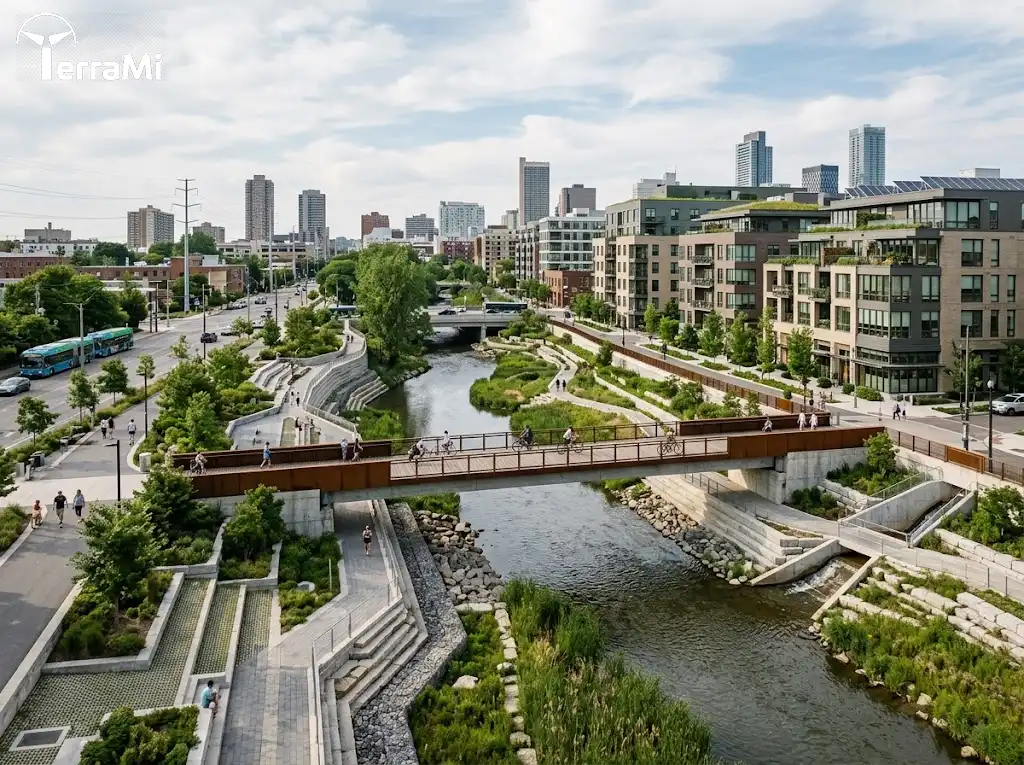
The Limits of Designing for a Predetermined Future
Conventional infrastructure planning is not inherently incapable of dealing with uncertainty. Engineers routinely apply safety factors, sensitivity analyses, contingency allowances, and scenario testing. These methods remain essential. The problem emerges when uncertainty is reduced to a limited range of assumptions and the resulting infrastructure is treated as a finished answer to a future that has not yet occurred.
Many large infrastructure projects follow a familiar sequence: forecast future conditions, establish design requirements, select a preferred solution, construct the asset, and operate it according to the original plan. This approach works reasonably well when future conditions remain within the range for which the system was designed. It becomes more problematic when changes occur outside those expectations or develop at a different pace.
The long service life of infrastructure intensifies this challenge. A decision made today may shape operational performance for 50, 75, or 100 years. Yet the information available at the time of design may be considerably less reliable than the information that becomes available ten or twenty years later.
Climate projections illustrate this tension. Scientific models can provide valuable information about possible future conditions, but uncertainty remains regarding the timing, intensity, and local expression of many climate impacts. The issue is not that climate science cannot inform engineering decisions. It is that infrastructure planning must account for the difference between a useful projection and a guaranteed future condition.
A fixed design can perform well under its original assumptions while becoming increasingly costly to modify as those assumptions change. In some cases, the problem is not that the initial investment was technically inadequate, but that the system was designed without practical options for adjustment.
Research on long-term water infrastructure planning has examined this distinction between static and flexible strategies. A study published in Nature Communications in 2019 found that infrastructure designed to be modified over time can help address evolving climate uncertainty and reduce the need for expensive overbuilding, although flexibility itself can involve additional costs and trade-offs. The central question is not whether every asset should be made adjustable, but when flexibility creates enough value to justify its inclusion in the original design.
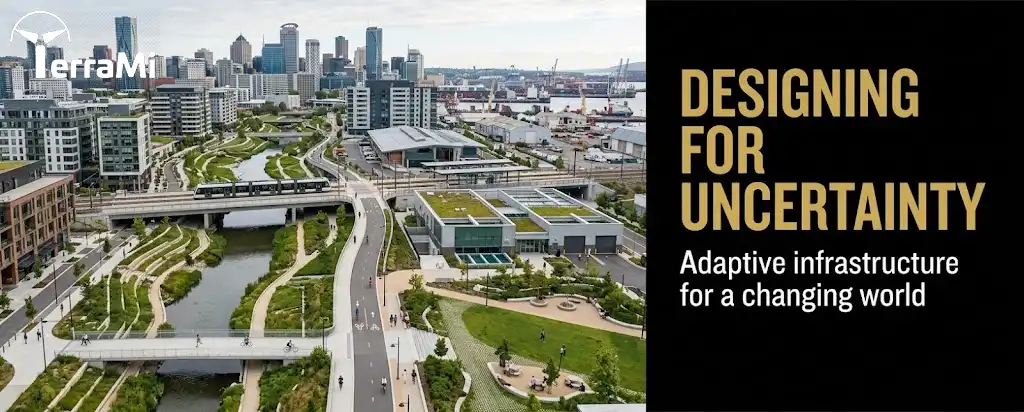
Adaptive Infrastructure Is More Than Resilient Infrastructure
The terms resilient infrastructure and adaptive infrastructure are closely related, but they are not interchangeable.
Resilient infrastructure is generally concerned with maintaining or restoring essential functions when exposed to disruption. This may involve stronger structures, redundant systems, flood protection, emergency response capabilities, or operational arrangements that allow services to recover after an extreme event.
Adaptive infrastructure includes these concerns but extends the question further:
What happens when the conditions affecting infrastructure performance continue to change throughout its service life?
A resilient bridge may be designed to withstand a specified level of flooding or seismic activity. An adaptive bridge may also incorporate provisions for future modification, monitoring systems that identify changing risks, or design features that allow its protective measures to be upgraded as conditions evolve.
The distinction is one of time and decision-making. Resilience often focuses on how a system withstands and recovers from disruption. Adaptation focuses on how that system can change its configuration, operation, or protection strategy as new information and new conditions emerge.
This does not make adaptive infrastructure a replacement for resilience. Rather, adaptation can become one of the mechanisms through which long-term resilience is maintained.
A system may be robust against today’s known hazards but poorly prepared for tomorrow’s unknowns. Conversely, a system designed for endless modification without sufficient initial strength or reliability may fail before adaptation becomes possible. Effective infrastructure planning must address both requirements.
The practical implication is that engineers should not ask only whether an asset can withstand a defined hazard. They should also consider whether its performance can be maintained when the hazard itself changes, when demand evolves, or when the assumptions behind the original design no longer hold.
From Fixed Solutions to Decisions That Can Evolve
The most important shift in adaptive infrastructure is not necessarily a new material, technology, or construction method. It is a change in how infrastructure decisions are structured.
Traditional planning often seeks to identify the preferred solution before implementation. Adaptive planning instead considers how today’s decision affects the options available tomorrow.
This approach does not mean postponing every major investment until uncertainty disappears. In many infrastructure systems, waiting carries its own risks. Communities require water, transportation, energy, flood protection, and other essential services now. Delaying action can increase exposure to hazards and raise future costs.
The alternative is to distinguish between decisions that must be made immediately and decisions that can reasonably remain open.
Some investments are valuable under almost every plausible future. Improving asset maintenance, protecting critical land corridors, strengthening data collection, and addressing known vulnerabilities may offer immediate benefits without restricting future choices.
Other decisions involve substantial financial commitments or create physical conditions that are difficult to reverse. These require more careful consideration of how future changes might affect their value.
This distinction forms the basis of adaptive pathways planning. Instead of selecting one permanent response to uncertainty, planners identify a sequence of possible interventions, the conditions under which each may become necessary, and the signals that indicate when a change in direction should be considered.
The approach allows infrastructure systems to evolve without requiring every future intervention to be designed and funded at the outset.
“The most adaptable infrastructure decision is not necessarily the one that solves every future problem today, but the one that preserves meaningful options when tomorrow reveals something different.”
Designing for Change Instead of Predicting Every Outcome
The move towards adaptive infrastructure begins with recognising that flexibility must be considered during the earliest stages of planning and design. Once a project has been built around a fixed configuration, introducing meaningful changes can become technically difficult, financially expensive, or disruptive to essential services.
Designing for adaptation does not mean creating infrastructure that is incomplete or perpetually provisional. It means making deliberate decisions about which elements should remain stable, which can be modified, and how future interventions can be carried out without undermining the system’s core functions.
This distinction matters because not every component of an infrastructure system faces the same level of uncertainty. A structural foundation, underground utility corridor, pumping station, and digital monitoring platform may have different service lives, replacement costs, and opportunities for modification. Treating all of them as equally permanent or equally flexible is unlikely to produce an efficient design.
A more effective approach considers the relationship between an asset’s physical characteristics and the conditions under which it may need to change.
Designing for Multiple Futures
One of the central principles of adaptive infrastructure is to avoid relying exclusively on a single forecast.
Instead of asking, “What will future demand or climate conditions be?“, planners can ask, “How might the system perform under several plausible futures, and what would we need to change if conditions move in one direction or another?“
This shift encourages scenario-based planning. Scenarios do not need to predict precisely what will happen. Their purpose is to test whether a proposed infrastructure strategy remains useful across a range of possible conditions.
For example, a city planning a new water treatment facility may face uncertainty about population growth, industrial demand, water availability, and changing precipitation patterns. A conventional approach might select a capacity based on one projected demand figure. An adaptive approach could examine several demand scenarios and assess whether the facility can be expanded in stages, whether additional treatment modules can be added, or whether operational adjustments can extend capacity before major construction becomes necessary.
The resulting design may not be the largest or most technologically advanced option. It may instead be the one that delivers reliable service today while preserving practical choices for tomorrow.
This way of thinking also changes how project success is evaluated. A design should not be judged solely by its performance under the conditions assumed at commissioning. Its ability to maintain value as those conditions evolve can be equally important.
The Engineering Principles Behind Adaptive Infrastructure
Although adaptation is often discussed in strategic or policy terms, its effectiveness depends on concrete engineering decisions. Flexibility cannot be added through broad intentions alone. It must be translated into physical configurations, operational procedures, information systems, and financial arrangements that make future responses possible.
Several principles are particularly relevant.
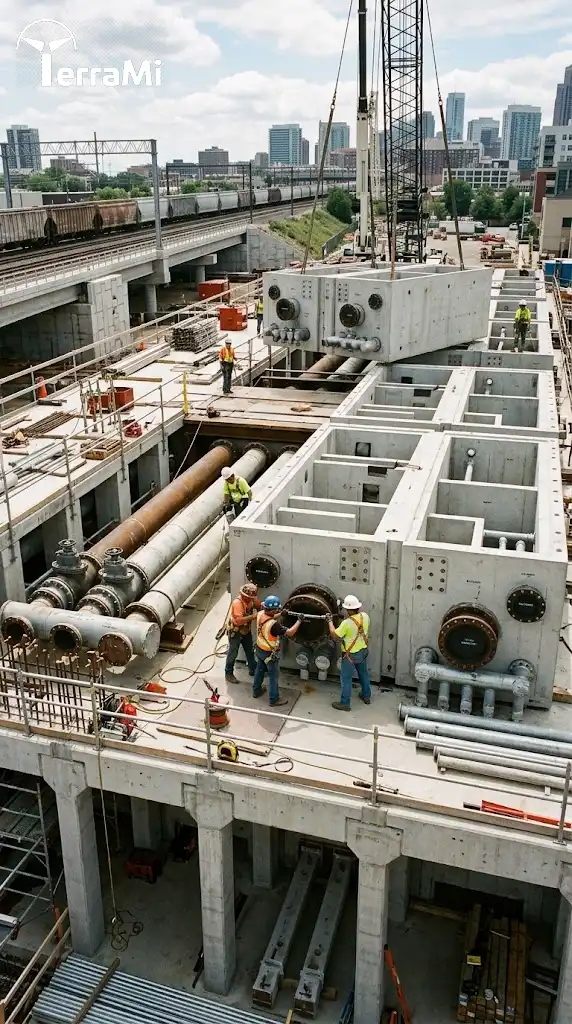
1. Modularity and Expandability
Modular design can allow infrastructure capacity or functionality to be increased without replacing an entire system.
A treatment facility, for instance, may be designed with space and connections for additional processing units. A transportation terminal may incorporate structural provisions for future passenger capacity. Energy systems may use modular generation or storage components that can be added as demand and technology change.
Modularity does not automatically make a project adaptive. Additional components require space, compatible interfaces, access for installation, and a realistic pathway for future investment. If these conditions are ignored, a system described as modular may still be difficult to expand.
The engineering value lies in reducing the cost and disruption associated with future change.
2. Designing for Disassembly and Replacement
Infrastructure components do not all need to remain in service for the same length of time.
A building, bridge, or utility system may contain elements with significantly different replacement cycles. Designing connections and assemblies so that individual components can be removed, repaired, upgraded, or replaced can extend the useful life of the broader asset.
This principle connects adaptive infrastructure with circular design. When components can be separated without damaging surrounding systems, maintenance becomes more manageable and future upgrades become more practical. Materials may also retain greater recovery value at the end of their service life.
The challenge is to balance accessibility and reversibility with structural integrity, safety, cost, and operational requirements.
3. Protecting Future Options Through Spatial Planning
Some of the most valuable adaptive decisions involve space rather than technology.
Preserving land for future flood protection, reserving corridors for transportation expansion, maintaining access to utility infrastructure, or avoiding development patterns that prevent future drainage improvements can create options that would otherwise disappear.
Once land is occupied or critical corridors are obstructed, adaptation may become much more expensive. A relatively modest planning decision made today can influence the range of technically feasible responses available decades later.
This is particularly important in dense urban environments, where competing land uses make future infrastructure expansion difficult.
4. Monitoring and Feedback
Adaptation requires information.
A system cannot respond intelligently to changing conditions if its operators do not know how performance is evolving. Monitoring systems, inspection programmes, environmental sensors, and operational data can help identify when an existing strategy is approaching its limits.
For example, a flood management system may track rainfall intensity, water levels, drainage performance, and changes in surrounding land use. Over time, this information can support decisions about whether existing measures remain adequate or whether additional interventions are necessary.
Monitoring does not eliminate uncertainty, but it can reduce the time between recognising a change and responding to it.
5. Interoperability and Upgradeable Systems
Infrastructure increasingly depends on interconnected physical and digital systems. As a result, the ability to integrate new technologies or exchange information across platforms is becoming part of long-term adaptability.
A digital monitoring system that relies on proprietary formats or closed interfaces may become difficult to upgrade as technologies change. Similarly, infrastructure equipment that cannot communicate with newer control systems may require premature replacement.
Designing for interoperability, accessible data structures, and upgradeable control systems can reduce technological lock-in. These considerations are particularly relevant when infrastructure is expected to operate across multiple generations of digital tools.
Adaptation Requires Decisions About When to Act
One of the defining features of adaptive planning is that it does not treat every possible future change as an immediate reason to intervene.
Instead, it establishes conditions that can guide future decisions.
These conditions are sometimes called adaptation triggers or decision thresholds. They may include changes in flood frequency, water demand, asset performance, operating costs, environmental conditions, or population growth.
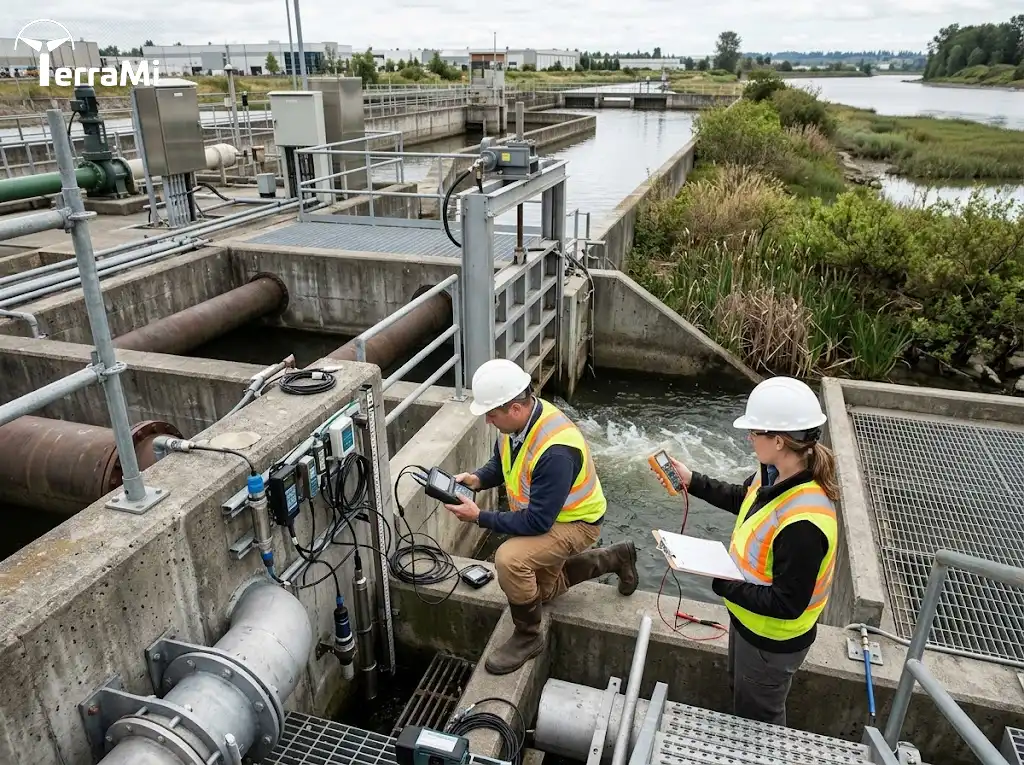
Consider a coastal infrastructure system designed with an initial level of flood protection. Rather than constructing the maximum conceivable defence immediately, planners may establish a monitoring framework and identify the conditions under which additional protection would be required.
If sea levels, storm surge exposure, or observed flooding reach a predefined threshold, the next intervention can be activated.
This approach requires more than technical forecasting. It requires clear responsibilities, reliable monitoring, funding mechanisms, and institutional willingness to act when the evidence supports a change.
Without these elements, an adaptive plan may remain a document rather than a functioning management strategy.
“Adaptation is not simply the ability to change infrastructure. It is the ability to recognise when change is necessary, determine what response is appropriate, and act before existing limitations become critical.”
The Financial and Institutional Dimensions of Adaptation
The technical feasibility of adaptive infrastructure is only one part of the challenge. A system may be physically capable of expansion, modification, or reconfiguration, yet remain difficult to adapt if its financing model, regulatory approvals, ownership structure, or operating responsibilities do not support future intervention.
This is where infrastructure adaptation moves beyond engineering design and becomes a question of institutional capacity.
Infrastructure projects are often evaluated through upfront capital costs, projected returns, construction schedules, and compliance requirements. These measures are necessary, but they may overlook the value of preserving future options. A design that costs slightly more today but allows a system to be upgraded without major reconstruction may offer financial advantages over its full service life.
The difficulty is that these benefits are not always captured in conventional procurement and investment models. The organisation paying for additional design flexibility may not be the same organisation that benefits from lower adaptation costs years later.
For example, a municipality may invest in a drainage system that includes provisions for future expansion. The initial project may appear more expensive than a fixed-capacity alternative, while the financial benefits of that flexibility may only become evident when rainfall patterns intensify or surrounding development increases runoff.
If evaluation focuses exclusively on initial construction cost, the adaptive option may be undervalued.
Lifecycle Value Instead of Initial Cost
Adaptive infrastructure requires a broader understanding of value.
Lifecycle cost analysis can help compare not only construction expenditure, but also maintenance, operational changes, future upgrades, disruption, replacement, and potential failure costs. When uncertainty is significant, these factors can materially influence which design represents the most responsible long-term investment.
This does not mean that every flexible feature deserves funding. Adaptation has a cost, and unnecessary complexity can reduce efficiency. The objective is to identify where flexibility provides meaningful value relative to its additional investment.
A useful assessment should consider several questions:
- How likely is the system to face conditions beyond its original design assumptions?
- How expensive would future modification be if flexibility were not incorporated today?
- Can adaptation be implemented without interrupting essential services?
- Who will finance, approve, and manage future interventions?
- Does the proposed flexibility create measurable benefits across plausible scenarios?
These questions help distinguish strategic adaptability from simply adding more features to a project.
Adaptive Infrastructure in Practice: From Flood Management to Urban Systems
The principles of adaptive infrastructure become clearer when applied to systems exposed to changing environmental and operational conditions.
Water and Flood Management
Water infrastructure is particularly sensitive to uncertainty because it must respond to changing rainfall, drought, population growth, land-use patterns, and water demand.
A fixed flood protection system may provide a defined level of protection based on historical rainfall or projected future conditions. However, the effectiveness of that system can change as precipitation patterns, upstream development, and drainage characteristics evolve.
Adaptive approaches may combine initial protective measures with reserved expansion space, monitoring networks, staged interventions, and complementary natural or engineered systems.
For instance, a flood management strategy might begin with improved drainage maintenance, upstream retention measures, and targeted protection of critical facilities. As monitoring reveals changes in flood behaviour or exposure, additional interventions can be introduced.
The goal is not to replace engineered protection with a single alternative. It is to create a system in which multiple responses can work together and evolve as conditions change.
Transportation Infrastructure
Transportation networks face uncertainty from population growth, changing travel patterns, technological developments, extreme weather, and shifts in economic activity.
A road, bridge, or transit facility designed around one demand forecast may become inefficient if travel behaviour changes significantly. At the same time, constructing maximum capacity from the outset can consume resources that may be better allocated elsewhere.
Adaptive transportation planning may involve preserving rights-of-way, designing stations for phased expansion, incorporating flexible traffic management systems, or creating multimodal connections that allow the network to respond to changing patterns of use.
In some cases, the most adaptive decision is not expanding a single transport corridor, but ensuring that the broader network can accommodate different combinations of public transit, active transportation, shared mobility, and private vehicles.
Energy and Utility Systems
Energy systems illustrate another dimension of adaptation: technological change.
The transition towards distributed generation, energy storage, electrification, and more flexible demand is changing the requirements placed on electricity infrastructure. Utility investments must often remain functional while technologies, consumption patterns, and regulatory conditions evolve.
Infrastructure designed with modular equipment, upgradeable control systems, and compatible connection standards may be better positioned to incorporate future technologies.
However, technological flexibility must be balanced against cybersecurity, reliability, interoperability, maintenance requirements, and the need to protect critical services.
An energy system that can accept new technologies but lacks adequate operational safeguards is not necessarily more resilient or more valuable.
The Role of Digital Infrastructure in Adaptive Decision-Making

Physical flexibility becomes considerably more useful when supported by reliable information.
Digital infrastructure can help organisations monitor asset conditions, evaluate emerging risks, simulate alternative interventions, and identify when existing strategies may no longer be adequate.
Sensors, asset management platforms, digital twins, and data analytics can contribute to this process by creating a more continuous understanding of how infrastructure performs over time.
Instead of relying exclusively on periodic inspections or assumptions established during design, operators can use updated information to assess whether adaptation triggers are approaching.
For example, a digital model of an urban drainage network could incorporate rainfall data, water levels, land-use changes, and system performance to support decisions about maintenance or future capacity improvements.
The value of these technologies does not come from digitisation alone. Data must be accurate, accessible, maintained, and connected to actual decision-making processes. A sophisticated platform that produces information without clear operational responsibilities may add complexity without improving adaptability.
Digital systems also introduce their own vulnerabilities. Cybersecurity, data governance, interoperability, and technology obsolescence must be considered when digital tools become part of critical infrastructure management.
The most effective approach treats digital infrastructure as an enabling layer for adaptation, not as a substitute for sound engineering, governance, and long-term planning.
Building Adaptation Into Infrastructure Governance
Adaptive infrastructure ultimately depends on decisions made by institutions.
A technically flexible asset may still fail to adapt if regulations prevent modifications, budgets cannot accommodate future interventions, or responsibilities are divided across organisations with limited coordination.
Governance arrangements should address adaptation before changing conditions create an urgent need for action.
This includes identifying who monitors performance, who reviews emerging risks, who authorises interventions, and who is responsible for securing funding. It also means establishing processes through which new scientific information, operational experience, and community needs can influence infrastructure decisions.
Long-term adaptation is rarely managed by a single engineering team. It may involve municipalities, utilities, regulators, asset owners, investors, emergency management agencies, and surrounding communities.
Coordination becomes especially important when infrastructure systems are interconnected. Changes to one asset can affect the performance of others, and an adaptation measure that benefits one part of a network may create constraints elsewhere.
For this reason, adaptive infrastructure should be considered at the system level rather than only at the individual asset level.
“Infrastructure becomes genuinely adaptive when its physical design, information systems, financing, and governance are capable of responding together as conditions change.”
TerraMi Perspective
Designing Infrastructure That Can Evolve With the Future
Infrastructure is often judged by its ability to perform under defined conditions. But the more important question for long-term infrastructure planning may be whether that performance can be sustained when those conditions change.
At TerraMi, we see adaptive infrastructure as part of a broader shift in how infrastructure systems are conceived, designed, and managed. Resilience cannot depend entirely on predicting every future hazard or building the largest possible protection into today’s projects. It requires a more deliberate relationship between physical design, operational intelligence, lifecycle value, and the capacity to make informed decisions over time.
This perspective changes the role of infrastructure professionals. Engineers are not only designing assets for current requirements; they are shaping the choices available to future operators, communities, and decision-makers.
A system that can be monitored, modified, expanded, and integrated with emerging technologies may retain its value under conditions that a more rigid alternative cannot accommodate. But adaptability must be purposeful. It should be grounded in engineering judgement, supported by reliable information, and aligned with the economic and institutional realities of the communities the infrastructure serves.
The future of infrastructure will not be defined solely by how accurately we predict what comes next. It will also depend on how intelligently we prepare for what we cannot yet know.

A Practical Starting Point for Infrastructure Adaptation
Organizations seeking to understand their current readiness for more intelligent, sustainable, and adaptive infrastructure can begin by examining their existing systems, decision-making practices, and opportunities for improvement.
TerraMi’s AI Pre-Assessment offers a starting point for organizations looking to assess their current position and inform their next strategic decisions.
Frequently Asked Questions
1. What is adaptive infrastructure?
Adaptive infrastructure refers to infrastructure designed or managed to respond to changing environmental, operational, technological, and social conditions throughout its service life. It incorporates flexibility, monitoring, and planned pathways for future modification rather than relying exclusively on fixed assumptions established during initial design.
2. How is adaptive infrastructure different from resilient infrastructure?
Resilient infrastructure focuses on maintaining or recovering essential functions during and after disruptions. Adaptive infrastructure extends this perspective by considering how systems can be modified or reconfigured as conditions evolve over time. Adaptation can support long-term resilience, but the two concepts address different aspects of infrastructure performance.
3. Why is adaptive infrastructure important under climate uncertainty?
Climate change is altering environmental conditions in ways that may not align with historical patterns or a single future projection. Adaptive infrastructure allows decision-makers to respond to emerging risks through staged interventions, monitoring, and flexible design strategies rather than depending entirely on one predetermined scenario.
4. What are the main principles of adaptive infrastructure design?
Key principles include modularity, expandability, upgradeable systems, accessible maintenance, protection of future development options, monitoring, interoperability, and the use of adaptation triggers to guide future decisions.
5. Does adaptive infrastructure always cost more to build?
Not necessarily. Some adaptive features require additional upfront investment, while others can reduce future modification costs, disruption, or premature replacement. The financial value of adaptation depends on the level of uncertainty, the asset’s lifecycle, and the cost of maintaining flexibility.
6. What role does digital technology play in adaptive infrastructure?
Digital technologies can support monitoring, performance analysis, scenario testing, and timely decision-making. Sensors, digital twins, and asset management platforms can help identify changing conditions and inform future interventions. Their effectiveness depends on data quality, governance, interoperability, and clear operational responsibilities.
7. Can existing infrastructure be made more adaptive?
Yes, although the available options depend on the asset’s condition, configuration, location, and operational constraints. Retrofitting monitoring systems, improving maintenance practices, preserving expansion options, upgrading components, and introducing more flexible operational procedures can all contribute to adaptation.